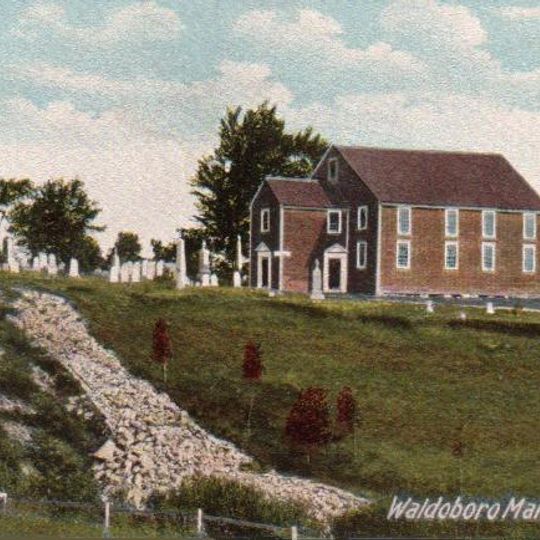
German Church and Cemetery, historic church in Maine, United States
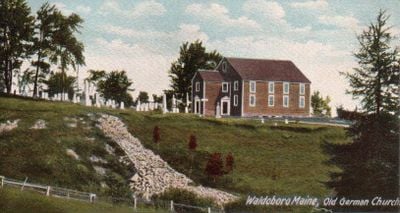
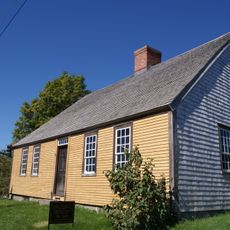
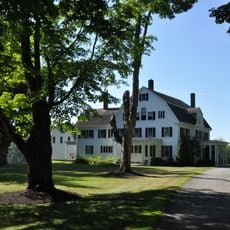
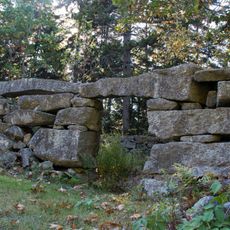
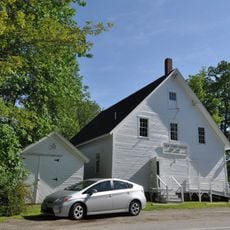
German Church and Cemetery is a small wooden building from the late 1700s built on a stone foundation with simple clapboard siding, located in Waldoboro near the Medomak River. The interior features wooden box pews with doors for families, a raised polygonal pulpit, and a gallery wrapping around three sides of the upper level, with carefully crafted woodwork creating a contained and intimate space.
German immigrants began settling in this area starting in the 1750s, and in 1772 they built this church as the center of their community. The building was moved to its current location in 1794 when the congregation carefully dismantled the structure and relocated it across the frozen river to new land.
The church served as the center of the German community in Waldoboro, where people gathered not just for worship but also for celebrations and major life events. Services were held in German for many years, helping settlers maintain their connection to their heritage until younger generations began speaking only English.
The site is easy to reach by following Route 1 North to Waldoboro and then turning onto Bremen Road at the church sign, where a simple driveway leads up to the grounds. The setting is quiet and surrounded by trees and fields, making for a peaceful visit to a historic location.
A well-known painter named Andrew Wyeth created a famous painting called 'Maidenhair' showing a young girl sitting in the church pews, connecting art and history in a way that draws interest from art lovers. The cemetery also holds the grave of Conrad Heyer, a Revolutionary War veteran and possibly one of the oldest people ever photographed, adding another layer of intrigue to the site.
The community of curious travelers
AroundUs brings together thousands of curated places, local tips, and hidden gems, enriched daily by 92,526 contributors worldwide.