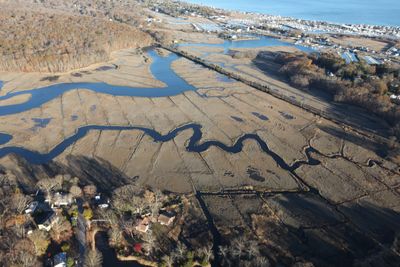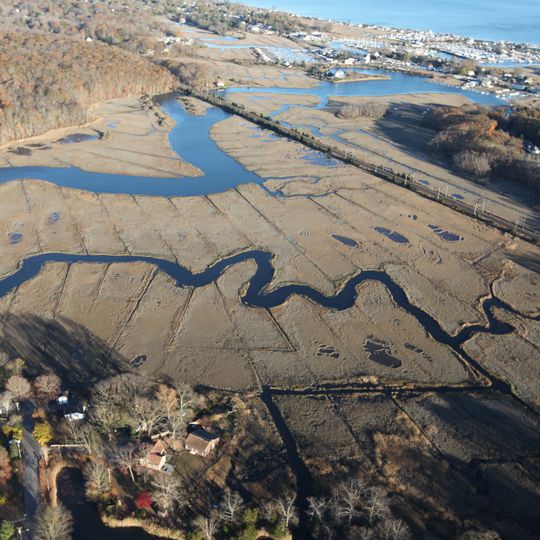
Stewart B. McKinney National Wildlife Refuge, National Wildlife Refuge along Connecticut coastline.
Stewart B. McKinney National Wildlife Refuge is a federal wildlife refuge along the Connecticut coast, made up of several separate units that protect salt marshes, barrier beaches, and offshore island habitats. The units are scattered along the shoreline and each one has its own trails and observation points that allow visitors to move through and observe the protected areas.
The refuge was established in 1972 under a different name to protect sensitive coastal areas from development pressure along the Connecticut shore. It was renamed in 1987 to honor Stewart B. McKinney, a Congressional representative from the state.
The refuge draws birdwatchers and school groups who come to observe shorebirds and migratory species along the Connecticut coast. Guided programs offered at some units help visitors connect what they see in the field with how coastal ecosystems function.
Because the refuge is made up of separate units along the coast, it helps to decide in advance which unit to visit, as each has its own access point. Sturdy footwear is a good idea since trails pass through wet areas, and bringing insect repellent is advisable during warmer months.
One unit of the refuge hosts one of the largest roseate tern breeding colonies in New England during nesting season, making it a notable site for this rare bird along the northeast coast. The colony forms on a small island that is otherwise inaccessible to visitors, so the birds can be observed only from a distance.
The community of curious travelers
AroundUs brings together thousands of curated places, local tips, and hidden gems, enriched daily by 92,629 contributors worldwide.