Golden Horns of Gallehus, Archaeological find at National Museum of Denmark, Denmark
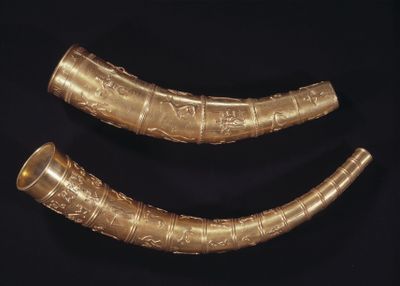
The Golden Horns of Gallehus were two drinking horns made from pure gold, weighing about seven kilograms in total and covered with images from the Migration Period. Both horns displayed a wealth of figures and patterns, including human shapes, animals, and geometric designs, arranged in several bands around the curved surfaces.
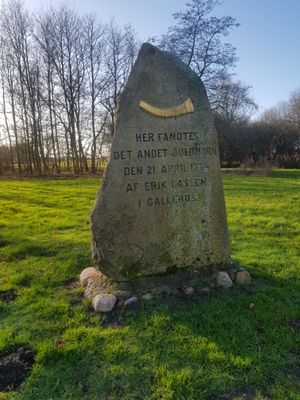
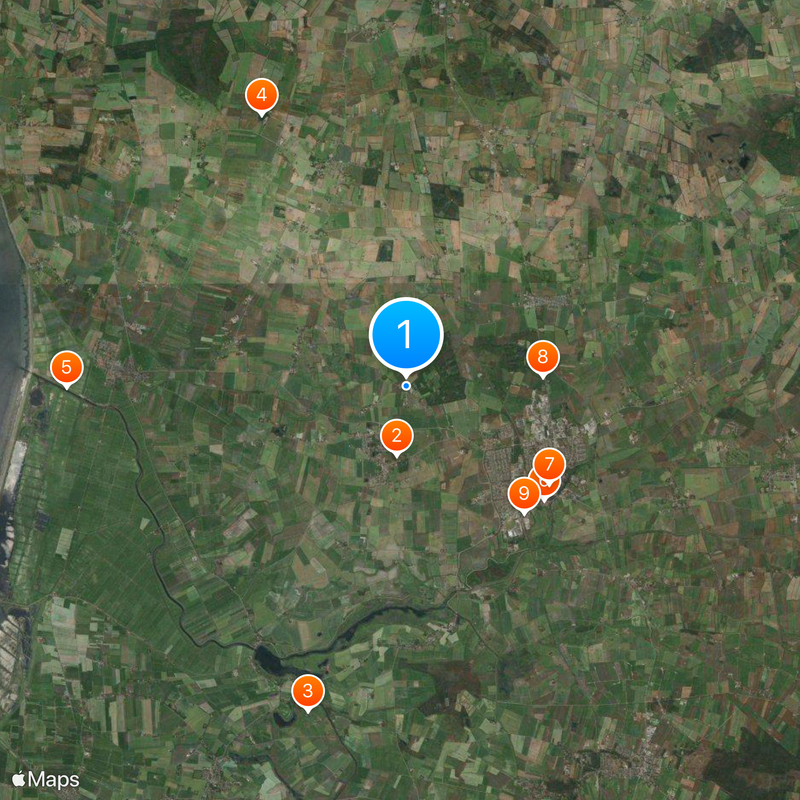
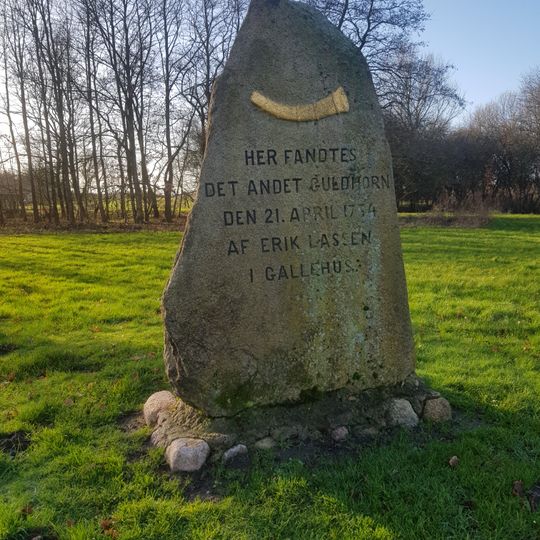
The longer horn was found in 1639 near Gallehus in southern Jutland, while a farmer discovered the shorter one in 1734 close to the same spot. A goldsmith stole both horns in May 1802 and melted them down, so only replicas exist today, based on drawings made in the 18th century.
The horns display a combination of Nordic and Roman motifs, including figures from mythology and inscriptions in ancient runic script.
The National Museum displays detailed replicas in Room 22 alongside other finds from the period between the fourth and sixth centuries. The copies were made in the 19th century and give an impression of the size and patterns of the originals.
A runic inscription on the shorter horn names a man called Lægæst, son of Holt, as the craftsman who made the vessel in the fifth century. This inscription is among the earliest known examples of runes used on a work of art and offers a rare glimpse into the identity of a smith from that period.
The community of curious travelers
AroundUs brings together thousands of curated places, local tips, and hidden gems, enriched daily by 60,000 contributors worldwide.