Can Bruixa, Masia in La Bordeta, Barcelona, Spain
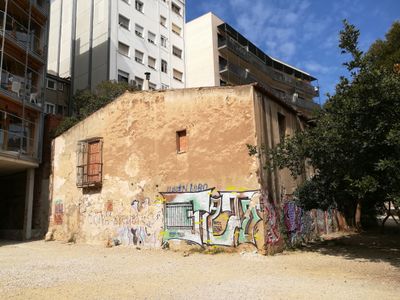
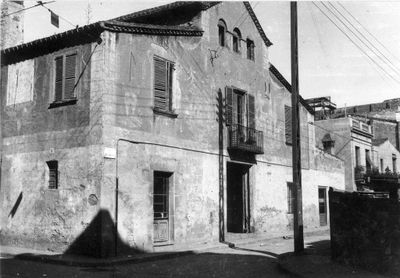
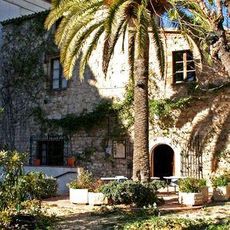
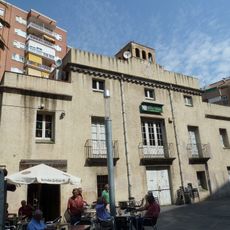
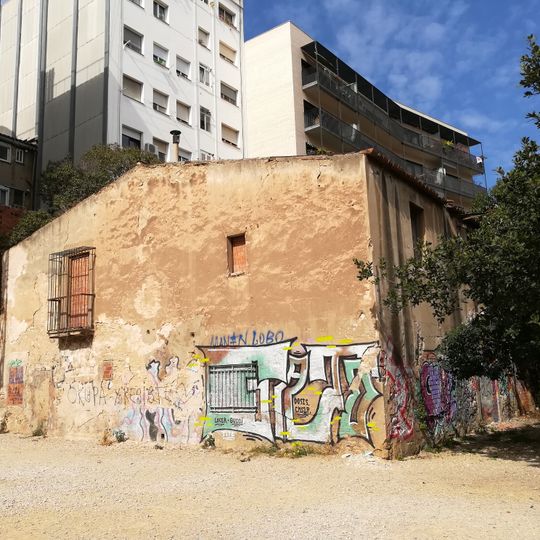
Can Bruixa, also known as Cal Paretó, is a masia in La Bordeta, Barcelona, Spain. It is a two-storey building with a quadrangular plan and a gabled tiled roof, showing weathered plaster and exposed stone at the lower left corner, with a balcony on the right facade and small arched windows near the roof.
The masia was built in the second half of the 19th century by Josep Elias i Anglí, who grew and sold vegetables. Later, it was acquired by the father of the current owner, Oleguer Rovira i Burés, known as "en Bruixa", who gave the house its name.
The building features a ceramic mosaic on an exterior wall depicting Saint Isidore the Laborer, the patron saint of farmers, a common sight in agricultural communities. The mosaic shows the saint kneeling in prayer before a crucifix, dressed in peasant clothing, with farmers and oxen plowing in the background.
The masia is located inside a block, hidden from the street, so you need to look for it behind the buildings on Carrer de la Constitució. It is in poor condition and not open to the public, so it is best to view it from the outside and respect any barriers.
A local legend tells of a beautiful woman who lived on the site before the factory was built and was accused of being a witch. The masia is the only remaining farmhouse in La Bordeta, as most others were demolished in the 1960s.
The community of curious travelers
AroundUs brings together thousands of curated places, local tips, and hidden gems, enriched daily by 60,000 contributors worldwide.