Everard's Printing Works, Grade II* listed commercial building in Broad Street, Bristol, England
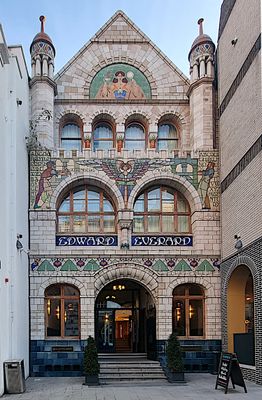
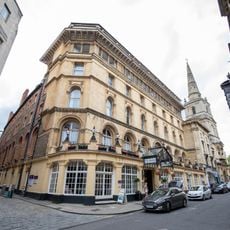
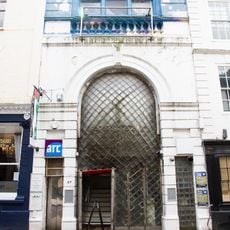
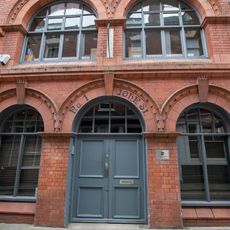
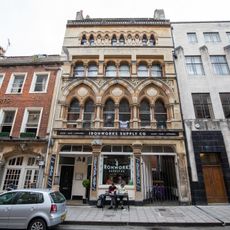
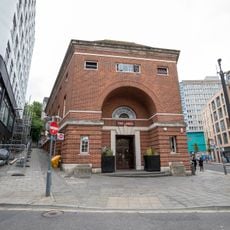
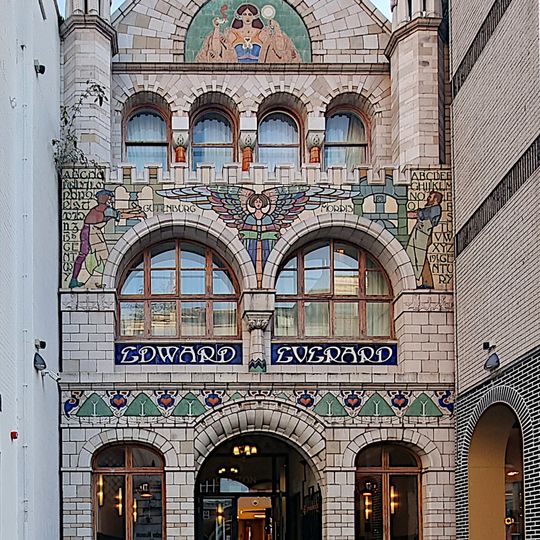
Everard's Printing Works is a Grade II* listed commercial building on Broad Street in central Bristol, known for its ornate ceramic facade in the Art Nouveau style. The ground floor opens through a triple archway, and the entire front is covered in Doulton Carrara ware tiles that give the surface the appearance of marble.
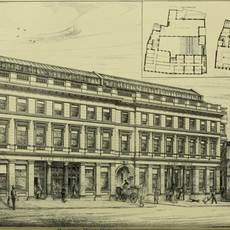
The building was designed in 1901 by architect Henry Williams for printer Samuel Everard and served as a working print shop for decades. In 1970, most of the original brick structure behind it was demolished, but the decorated facade was kept in place.
The facade features a female figure holding a lamp and a mirror, standing for Light and Truth, alongside portraits of Gutenberg and Caxton, two early figures in the history of printing. Anyone who looks closely can follow the story of the craft directly from the tiles.
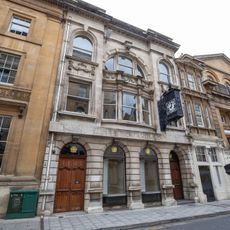
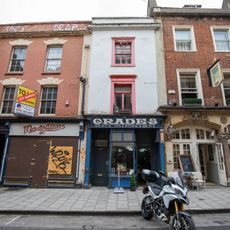
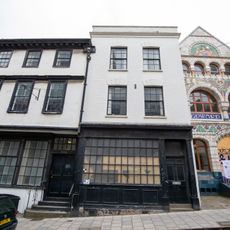
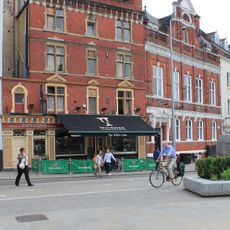
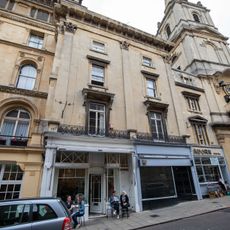
The building sits on Broad Street in central Bristol and is easy to reach on foot from nearby historic streets. The facade is best seen from the opposite side of the street, where you can step back far enough to take in the full width of the ceramic front.
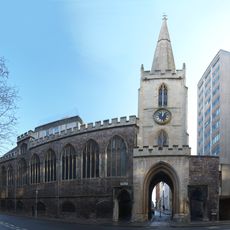
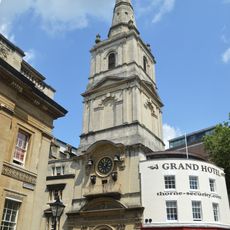
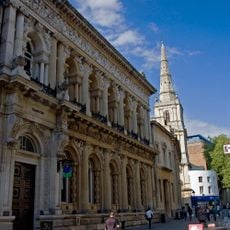
Although the building looks complete from the street, the facade is now essentially a freestanding wall, as the structure behind it was entirely rebuilt after the 1970 demolition. The original design also deliberately borrowed Gothic forms from the nearby Church of St John the Baptist, applying them to an industrial building.
The community of curious travelers
AroundUs brings together thousands of curated places, local tips, and hidden gems, enriched daily by 91,387 contributors worldwide.