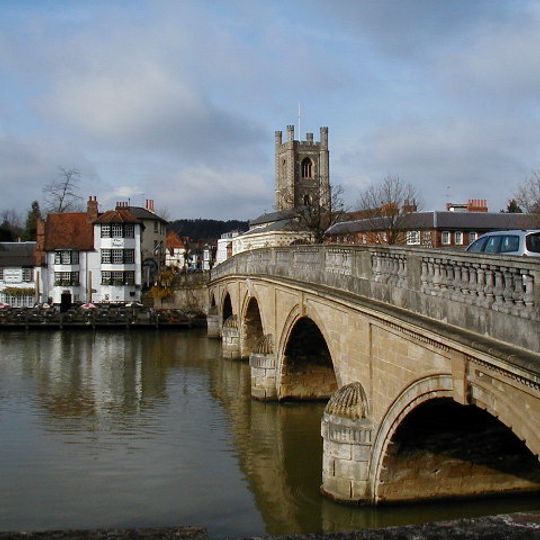
Henley Bridge, Road bridge in Henley-on-Thames, England
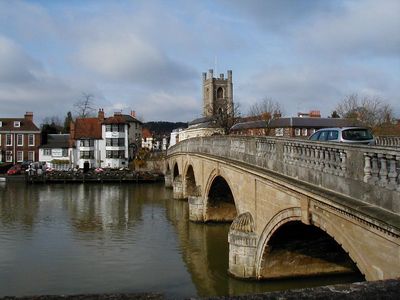
Henley Bridge is a stone road bridge over the River Thames in Henley-on-Thames, England, with five elliptical arches connecting Hart Street to White Hill as part of the A4130 route. It is a Grade I listed building, constructed from local stone in a classical style of the 18th century.
The bridge was built in 1786 to replace an earlier wooden crossing that was destroyed by flooding in 1774. The new stone structure was intended to be more lasting and to handle the growing traffic along this part of the river.
The keystone carvings on the central arch represent the Thames and its source as river goddesses, made by sculptor Anne Seymour Damer. Visitors who stop and look up at the stonework can still see these figures clearly from the pavement.
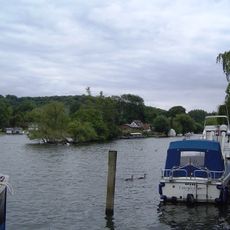
The bridge is open to vehicles and pedestrians all year, and walking across it gives a good view of the river in both directions. Weekends and the summer regatta season bring noticeably more people to the area, so early morning visits are calmer.
In 1829, the bridge served as the finish line for the very first Oxford versus Cambridge Boat Race, years before the event moved to its current location on the Thames in London. That first race drew a large crowd and set in motion what became one of England's longest-running sporting events.
The community of curious travelers
AroundUs brings together thousands of curated places, local tips, and hidden gems, enriched daily by 60,000 contributors worldwide.