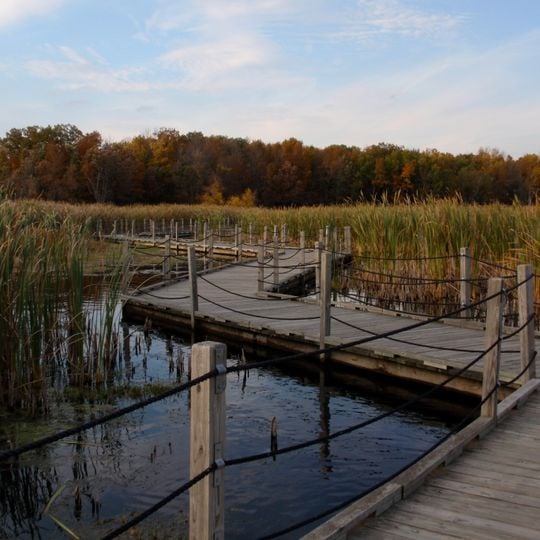
Horicon Marsh, Wetland in Wisconsin, United States
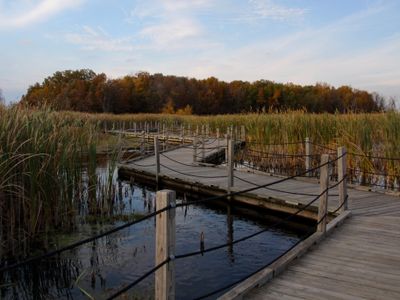
Horicon Marsh is a large wetland in Wisconsin, United States, made up of open water and cattail marsh. It is divided into a national wildlife refuge in the north and a state wildlife area in the south, together covering about 32,000 acres (130 km2).
The marsh formed after the last Ice Age when glacial meltwater left a lake that gradually filled with sediment. In the 19th century, a dam raised water levels for a sawmill, but it was removed in 1869, and later efforts to drain the marsh for farming failed. In the 20th century, conservationists worked to protect the area, leading to the establishment of wildlife refuges.
The name Horicon comes from a local Native American term, and the marsh has long been a gathering place for people drawn to its wildlife. Today, the annual migration of Canada geese is a community event, with residents and visitors alike watching the flocks pass through.
Visitors can explore the marsh by car along roads that cross the area, or on foot via trails and boardwalks. Binoculars are useful for watching wildlife from a distance, and the best times to see birds are early morning and late afternoon.
The marsh sits in a region with the highest concentration of drumlins in the world, which form the islands within it. It was also once called the largest man-made lake in the world after a dam raised water levels in the 19th century.
The community of curious travelers
AroundUs brings together thousands of curated places, local tips, and hidden gems, enriched daily by 95,298 contributors worldwide.