Martinsville Fish Dam, Native American fish weir in Henry County, United States.
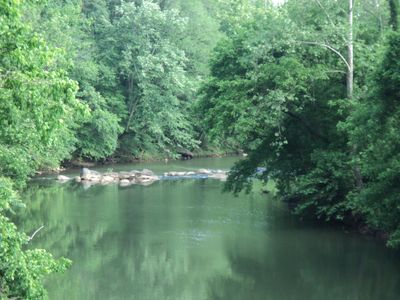
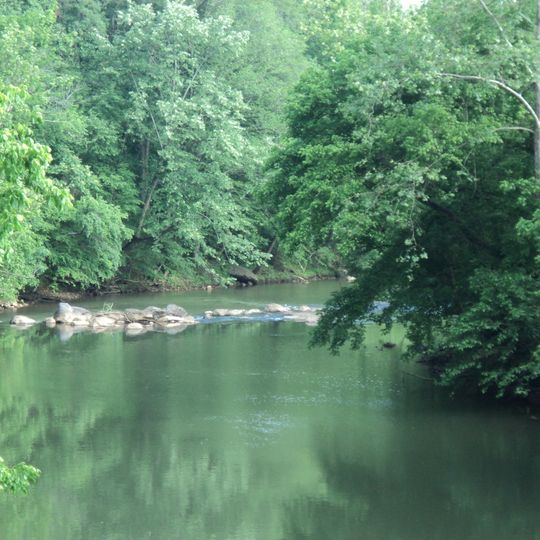
Martinsville Fish Dam is a stone structure that extends across the Smith River in a V-shaped pattern, directing water flow toward a collection point downstream. The walls are arranged so that fish are naturally funneled into specific areas for capture.
The dam was constructed by Indigenous peoples and was added to the National Register of Historic Places in 1974, recognizing its engineering significance. This designation highlighted the structure as an important example of ancient construction techniques.
The structure demonstrates traditional Indigenous fishing methods, with carefully positioned stones that created an efficient system for collecting fish in the river. Visitors can still observe how these time-tested techniques guided water flow and concentrated the catch.
The stone walls are best visible during low water periods, which is when you can examine the construction techniques most clearly. Plan your visit during drier seasons if you want to see the internal structure in greater detail.
The Archeological Society of Virginia owns half of the dam, an unusual arrangement that ensures its preservation for research and education. This shared stewardship is rare and reflects a commitment to long-term protection of the site.
The community of curious travelers
AroundUs brings together thousands of curated places, local tips, and hidden gems, enriched daily by 60,000 contributors worldwide.