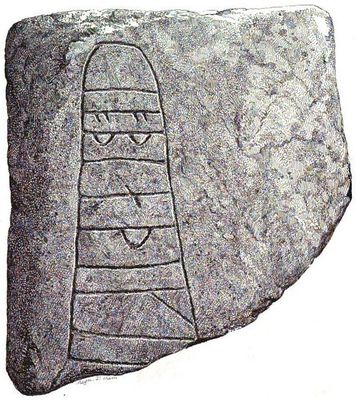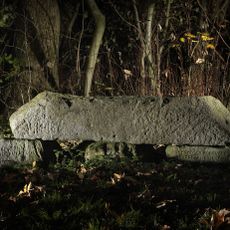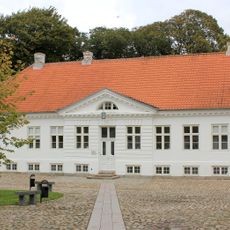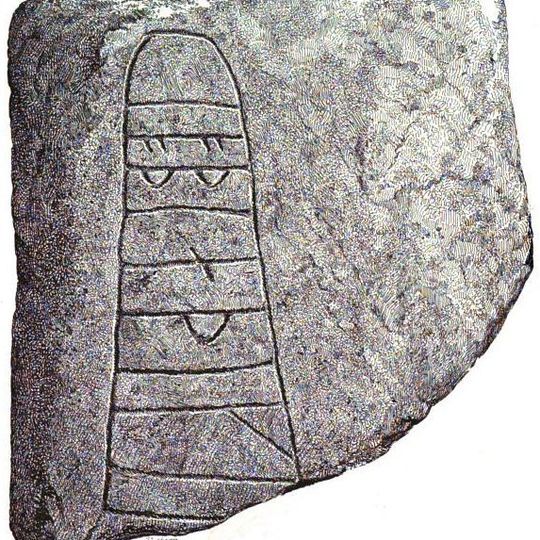
Eltang stone, Norse runestone at National Museum of Denmark, Denmark.
The Eltang stone is a runestone featuring nine runes arranged horizontally within a frame and housed in the National Museum of Denmark's collection. The artifact displays the typical form and design of stones from this period with engraved text on its surface.
The stone was discovered in 1866 in North Stenderup in Kolding Municipality in Jutland and later added to the museum's collection. The inscription dates from the period between 900 and 1200, a phase of intense runic culture in Scandinavia.
The inscription uses the Younger Futhark script and shows how people during the Viking period marked graves and memorials with runic texts. This memorial practice was common across Scandinavia and reflects the religious beliefs of that era.
The stone is displayed in a permanent exhibition at the National Museum in Copenhagen, where it is shown alongside other Viking-age objects. Visitors can find it in the runic section of the exhibition, where informational plaques explain the inscription and its significance.
George Stephens identified the inscription in 1868 and recognized it as one of the earliest mentions of the god Odin on Scandinavian runestones. This interpretation made the stone an important testament to Viking-age religious practices in the region.
The community of curious travelers
AroundUs brings together thousands of curated places, local tips, and hidden gems, enriched daily by 91,910 contributors worldwide.