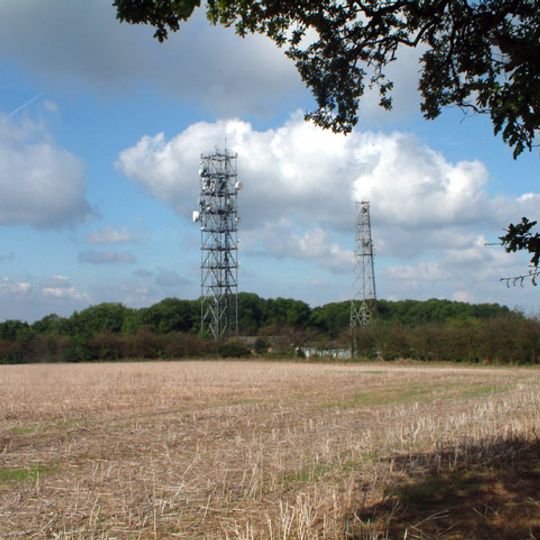
Tatsfield Receiving Station, BBC radio monitoring facility in Surrey, England
Tatsfield Receiving Station is a BBC radio monitoring facility on the North Downs, equipped with multiple masts and technical apparatus for capturing broadcast signals. The site was designed to receive and measure radio frequencies across a wide range of international broadcasts.
The facility began operations in September 1929 as a broadcast monitoring post. Its role expanded during World War II when it was tasked with tracking enemy propaganda and foreign broadcasts across Europe and Asia.
The station played a key role in British radio monitoring, helping to oversee international broadcast frequencies and ensure signal quality across the country. Visitors can see how such facilities were central to managing the nation's radio communications.
The site sits roughly 15 miles (24 kilometers) southeast of central London on elevated terrain. Access is limited and visitors should check current conditions before attempting to view or explore the grounds.
In October 1957, the station became the first in Britain to detect radio signals from the Soviet satellite Sputnik 1. This achievement shows just how sensitive and capable the equipment was during the earliest days of space exploration.
The community of curious travelers
AroundUs brings together thousands of curated places, local tips, and hidden gems, enriched daily by 91,529 contributors worldwide.