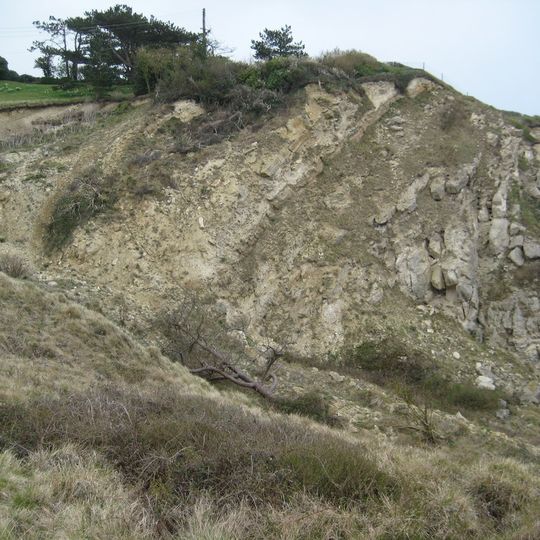
Burning Cliff, Natural coastal cliff in Ringstead Bay, Dorset, England
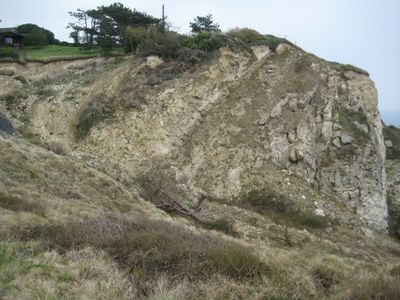
Burning Cliff is a coastal formation in Ringstead Bay, Dorset, rising about 31 meters high and composed of Kimmeridge Clay and other rock layers. The cliff face shows clear erosion patterns and visible landslide scars beneath the White Nothe headland.
The cliff gained its name from underground fires discovered in 1826, caused by the combustion of bituminous shale layers within the rock. This burning phenomenon has remained a defining feature of the geology and appearance of this coastal section.
The site forms part of the Jurassic Coast World Heritage area, and visitors can see rock layers from millions of years ago exposed in the cliff face. People come here to understand how ancient seas shaped this land.
Access is available via the South West Coast Path, and visitors should check tide times before heading out for safe passage along the base. Weather conditions at this coastal location can change quickly, so waterproof clothing and sturdy footwear are recommended.
The rock contains pyrite minerals that generate heat through oxidation, sufficient to ignite the bituminous materials and create fires beneath the ground. This natural combustion process is rare at European coastlines and makes this cliff a notable geological oddity.
The community of curious travelers
AroundUs brings together thousands of curated places, local tips, and hidden gems, enriched daily by 91,412 contributors worldwide.