Hønse-Lovisas hus, House cafe and art gallery in Sagene, Oslo, Norway
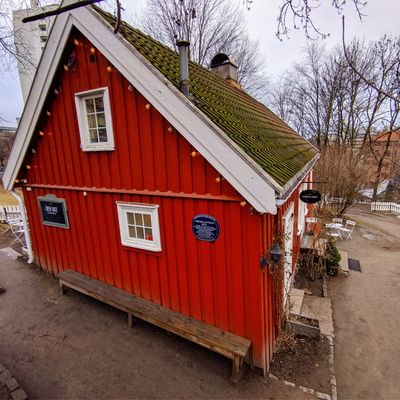
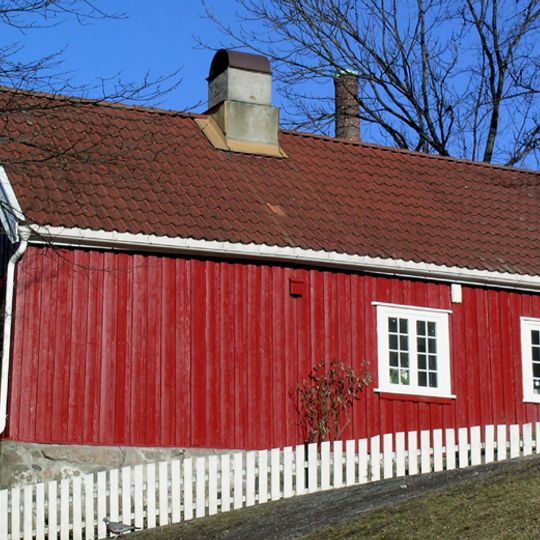
Hønse-Lovisa is a small one-story red wooden house with vertical plank siding, white trim, and a steep gable roof covered in green mossy shingles near Beierbrua in Oslo. A long wooden bench sits on the gravel in front, while bare trees and a chain-link fence stand behind the paved path at the side.
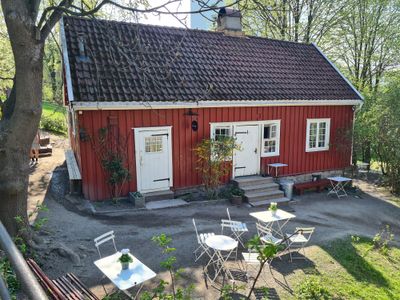
The house was built between 1800 and 1825 for a city clerk and first served as a home for the sawmaster of Monsesagen. It later became a manager's residence for the workhouse stamp mill, then housed several private residents before being repaired in 1980 and converted into a cultural cafe in 2007.
The name Hønse-Lovisa comes from a character in Oskar Braaten's 1911 play Ungen, set among working people on this side of the river. A blue plaque from Selskabet for Oslo Byes Vel, unveiled by the author's grandchild in 2019, marks the building and connects it to that local story.
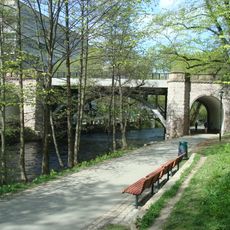
The house is easy to spot beside the bridge, with its red walls and blue round sign on the front. A wooden bench offers a place to pause before entering, and the ground-level entrance makes the main room straightforward to reach.
A visitor is standing in what was once the kitchen where a woman named Laila Rafaelsen was born in 1937. The same small house gave temporary shelter to the writer Sigbjørn Hølmebakk around 1980, when a bathroom and running water were added.
The community of curious travelers
AroundUs brings together thousands of curated places, local tips, and hidden gems, enriched daily by 60,000 contributors worldwide.