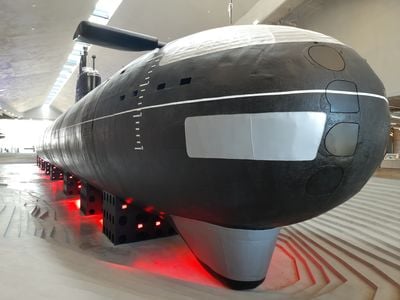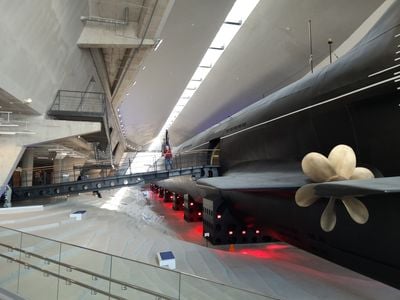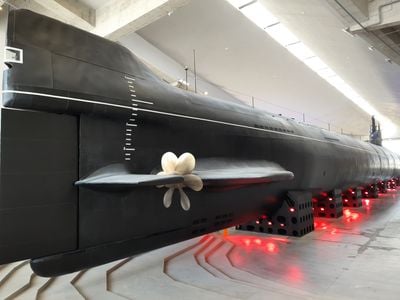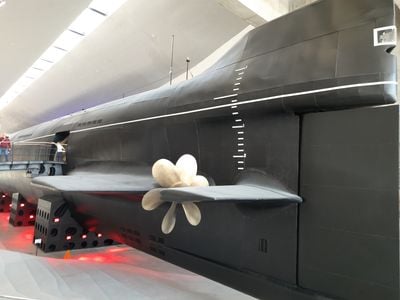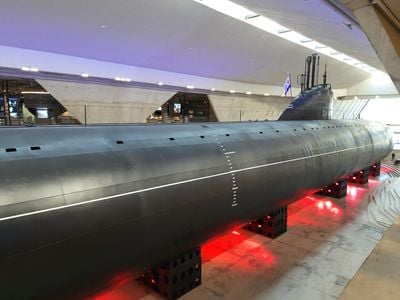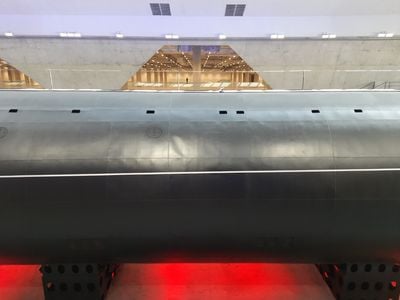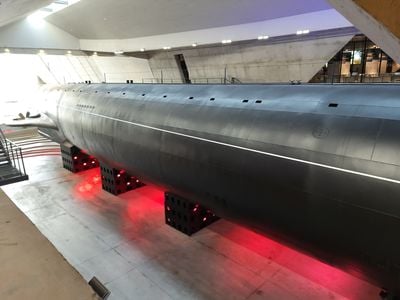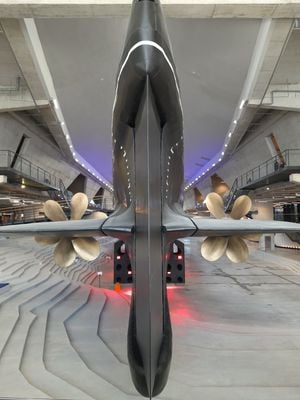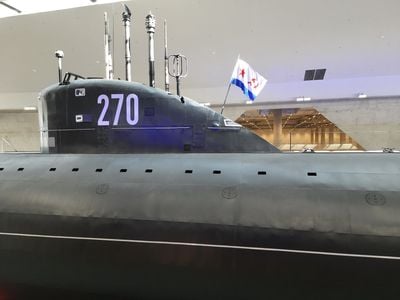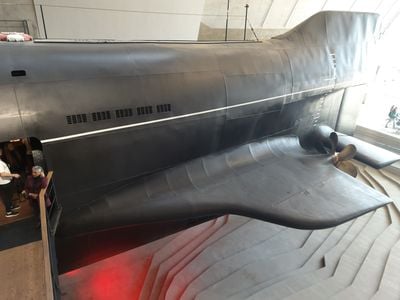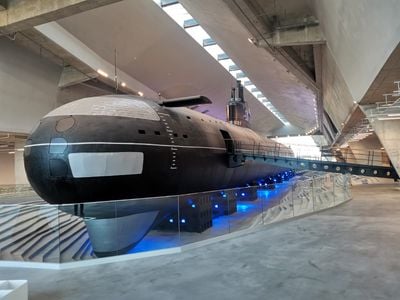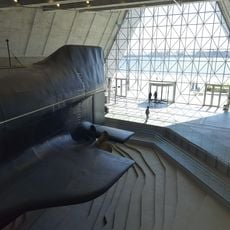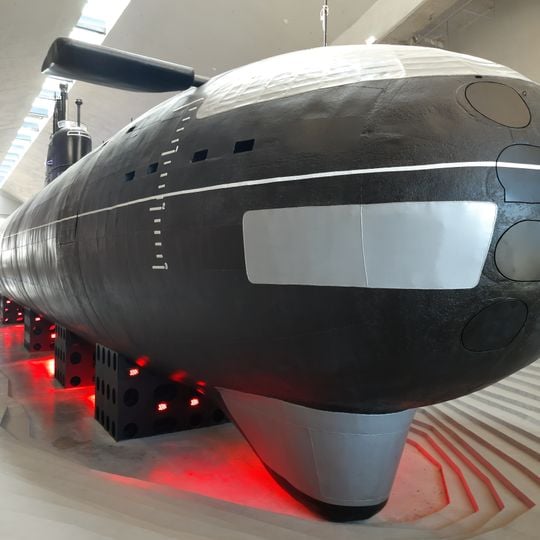
K-3 Leninskij Komsomol, 1957 November-class submarine
K-3 Leninski Komsomol is a preserved metal submarine at the Naval Glory Museum in Kronstadt, Russia, measuring over 107 meters in length. The exterior hull shows the wear of decades of service, while the visible torpedo tubes at the bow and the massive shape of the hull give a sense of the size and function of a nuclear submarine.
The vessel was launched in 1957 and became the first Soviet nuclear submarine to enter service in 1958. It reached the North Pole underwater in the 1960s and suffered a serious fire in the Norwegian Sea in 1967 that killed 39 crew members, before being decommissioned in 1988.
The name Leninski Komsomol honors a Soviet youth organization and was given to the vessel after its North Pole mission. Today, school groups and families visit to see a piece of Russian naval heritage and understand how crews lived in the tight quarters of a submarine.
The interior of the submarine can be visited, and you should expect narrow passageways and low ceilings. Visitors walk through control rooms and engine spaces, which gives a sense of what life was like underwater, and the onsite explanations help you understand the different sections.
The vessel reached the North Pole underwater, which was a technical and nautical feat at the time. After this success, it received its new name in recognition of the crew's achievement.
The community of curious travelers
AroundUs brings together thousands of curated places, local tips, and hidden gems, enriched daily by 60,000 contributors worldwide.