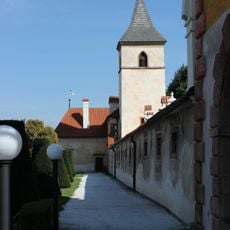
Kratochvíle Castle, Renaissance château in Netolice, Czech Republic
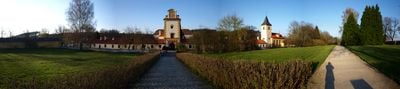
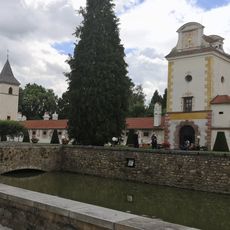
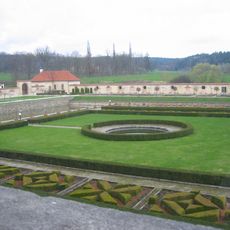
Kratochvíle is a Renaissance villa built in 1583–1589 by Vilém of Rožmberk to designs by Baldassare Maggi, modelled on Italian suburban villas. A strictly symmetrical main building stands on all four sides within a water moat, and the grounds are entered through a gate tower with a clock. The Chapel of the Nativity of the Virgin Mary occupies the southeast corner.
Vilém z Rožmberka built the lodge between 1583 and 1589 to designs by the Italian architect Baldassare Maggi, on the site of a farmyard called Leptáč that Jakub Krčín had held. The Rosenbergs kept it as a summer and hunting residence; after 1602 it passed to Rudolf II and later to the Eggenbergs and Schwarzenbergs.
The entrance area and ground-floor dining hall carry hunting-themed paintings by Georg Widmann, while ceiling paintings in the reception rooms depict scenes from Roman history by Antonio Melana. The chapel was painted by Widmann after designs by Albrecht Dürer. The name Kratochvíle means "pastime", reflecting its use as a country retreat.
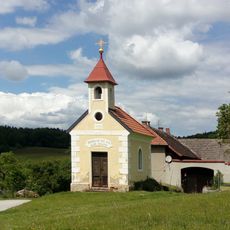
The castle is managed by the National Heritage Institute and is open to the public; the entrance tower with its clock stands in the perimeter wall, and the Chapel of the Nativity of the Virgin Mary lies in the southeast corner of the grounds. The main building is ringed on all four sides by a water moat, so visitors cross it to reach the interior.
The alliance coat of arms of the Rožmberks and Pernštejns is set on the entrance tower, recalling Vilém of Rožmberk and his fourth wife Polyxena. The water moat also drained the unstable marshy subsoil beneath the main building.
The community of curious travelers
AroundUs brings together thousands of curated places, local tips, and hidden gems, enriched daily by 92,171 contributors worldwide.