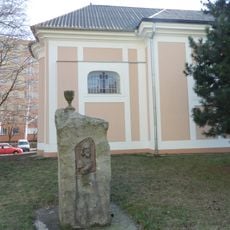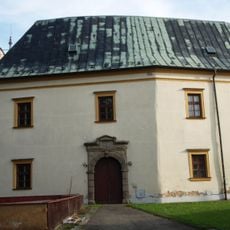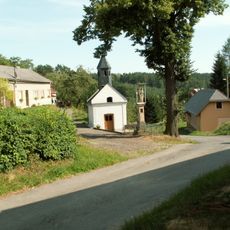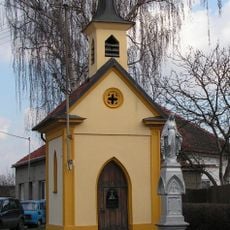
Předmostí u Přerova, Archaeological site in Předmostí, Czech Republic
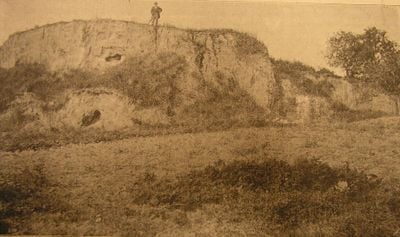
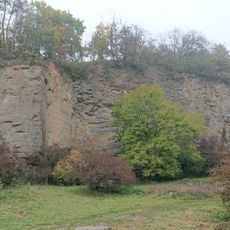
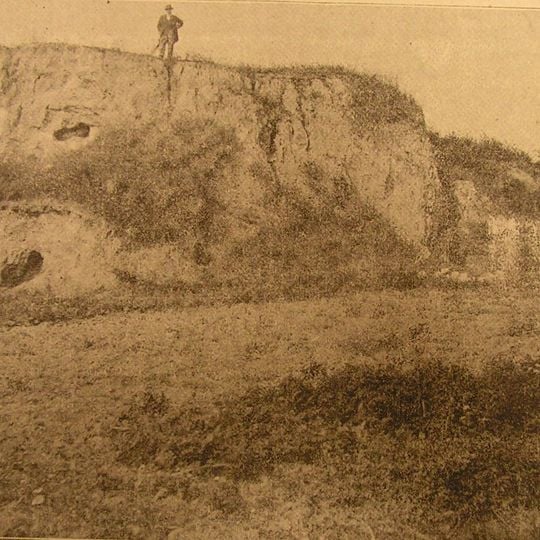
Předmostí u Přerova is a Late Pleistocene site on a loess ridge in the northwestern part of Přerov, Moravia. The loess was wind-blown at the end of the last ice age, around 10,000 BC, and overlies the remains of a limestone hill once flanked by two 250 m crags, Hradisko and Skalka, largely destroyed by quarrying. The site is dated to between 24,000 and 37,000 years ago.
Archaeological work began here in the late 1800s and continued through the early 1900s, uncovering evidence of human presence from roughly 37,000 to 24,000 years ago. These findings rank among the oldest known settlements in this part of Europe.
The site's name comes from Předmostí, the Přerov district where it lies; the Czech word předmostí means a place before a bridge. Its finds belong to the Gravettian culture, and the mass grave of 20 individuals was accompanied by stone tools and ornaments such as drilled teeth and shells. A circular sandstone disc with a central hole, found in 1894, remains unexplained.
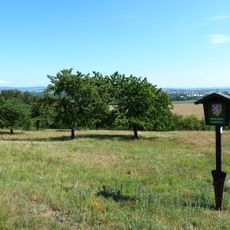
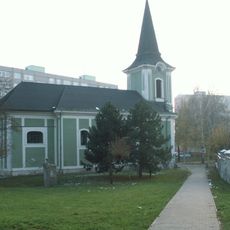
A marked trail with interpretation boards guides visitors through the site and leads to an exhibition in a nearby school building. Following the trail first and then viewing the collected finds helps you understand what archaeologists discovered here.
Excavations here unearthed bones from hundreds of mammoths, an extraordinary quantity for such an ancient location. Among these discoveries lay the skeleton of a dog bearing a mammoth bone, suggesting a close relationship between these early humans and their animals.
The community of curious travelers
AroundUs brings together thousands of curated places, local tips, and hidden gems, enriched daily by 92,240 contributors worldwide.