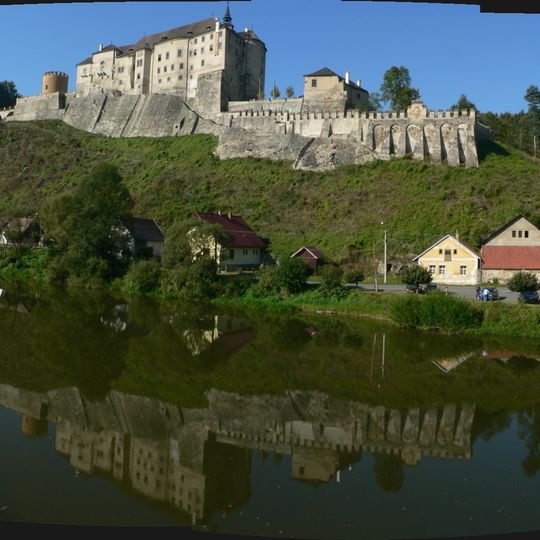
Český Šternberk Castle, Gothic castle in Český Šternberk, Czech Republic
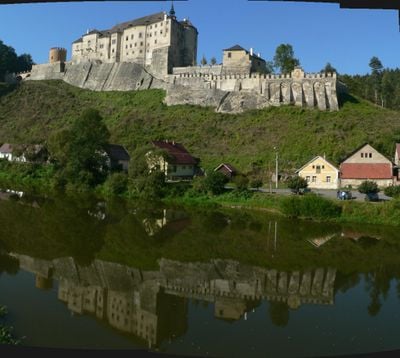
Český Šternberk Castle stands on a steep rocky ridge about 350 metres above sea level on the left bank of the Sázava River. Its early Gothic core is surrounded by massive grey defensive walls with a row of arched openings, a round corner tower with a conical roof, and a pale main building with a slender spire. The separately fortified southern outwork, the Hladomorna, lies a few dozen metres south of the castle.
Zdeslav of Divišov founded the castle in 1241 on a rocky spur above the Sázava; its name comes from his family's golden eight-pointed star. In 1467 King Jiří of Poděbrady's troops took it after Zdeněk Konopišťský of Šternberk joined the revolt against the king, and Vladislav Jagellonský returned it in 1479. The Šternberks bought it back in 1841 and held it until nationalisation in 1949; restitution returned it to Zdeněk Sternberg in 1992.
The rooms display collections of weapons, porcelain, and Baroque paintings that reflect how the family lived across the centuries. These objects and artworks show the tastes and interests of those who inhabited the castle.
The tour route covers sixteen rooms, and the castle is open to visitors year-round. The owner's family still lives in part of the building, so those private rooms are not shown. The southern outwork, the Hladomorna bastion, stands a few dozen metres south of the main castle on the ridge.
The collection holds around 545 copper engravings depicting scenes from the Thirty Years' War, offering a rare glimpse into how warfare was visually documented. These works are an exceptional record of artistic responses to conflict from that era.
The community of curious travelers
AroundUs brings together thousands of curated places, local tips, and hidden gems, enriched daily by 92,393 contributors worldwide.