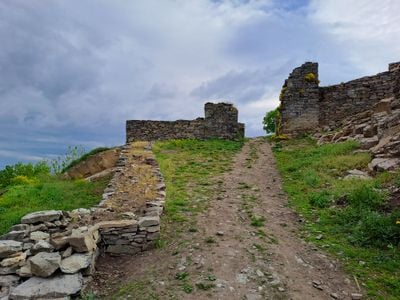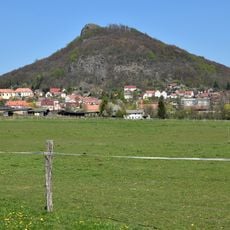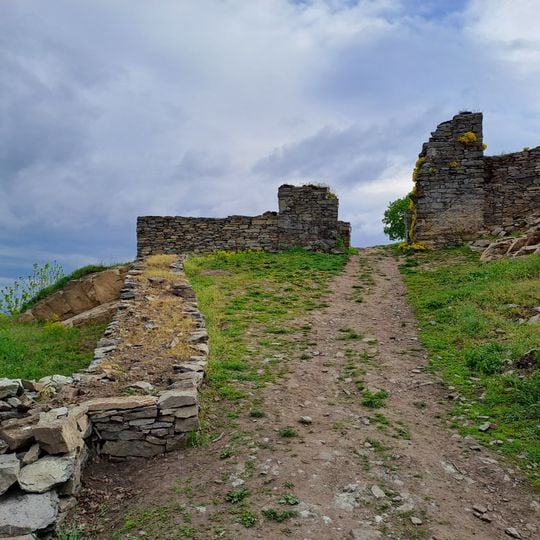
Kalich, Castle ruin on Kalich hill near Třebušín, Czech Republic
Kalich is a castle ruin set on a rocky spur in the Bohemian Central Highlands of the Czech Republic, near the village of Třebušín. Stone walls and foundations are still standing, giving a clear sense of the original layout and the scale of the fortification.
Jan Žižka founded the castle in May 1421 during the siege of Litoměřice; Zikmund Děčínský of Vartenberk failed to take it that September. After Žižka's death in 1424 it passed to his brother Jaroslav, then to his sister Anežka. In 1437 troops of the Upper Lusatian Six Cities' League stormed and burned it; later owners held it until it was abandoned by the early 16th century.
The castle's name comes from the Hussite chalice, the symbol of communion in both kinds that gave the movement its name; Jan Žižka called himself "of Kalich" from 1422. German sources also record the hill as Kelchberg, and the chalice emblem remains the ruin's identifying mark.
The ruin is accessible on foot from Třebušín via marked hiking trails, and the terrain is rocky and uneven in places, so solid shoes are a good idea. There is no paved road to the site, so allow enough time for the walk.
The sources record that in 1868 a foundation stone was to be taken from the ruin for the National Theatre in Prague, but the Litoměřice regional captain forbade it; the stone went to Lounky and in 1893 served as the gravestone of politician Václav Kratochvíl, who had initiated the removal.
The community of curious travelers
AroundUs brings together thousands of curated places, local tips, and hidden gems, enriched daily by 94,070 contributors worldwide.