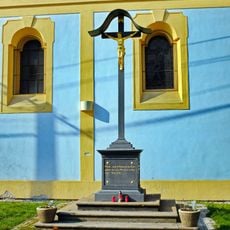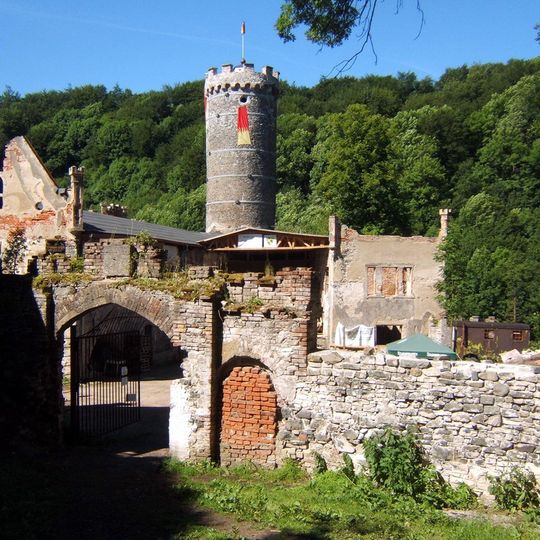
Hauenštejn, Gothic Revival castle in Horní Hrad, Czech Republic
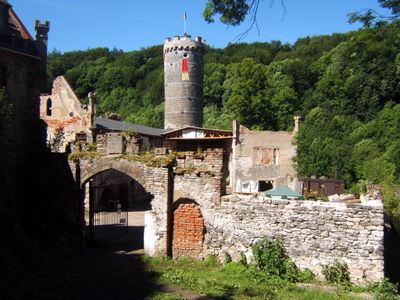
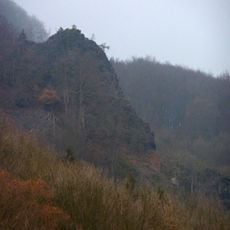
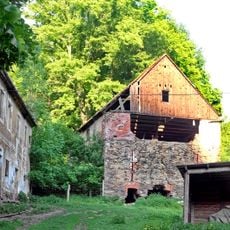
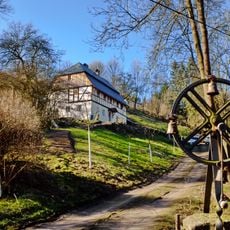
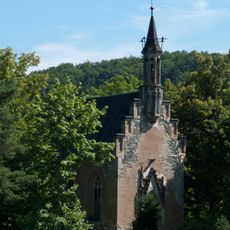
Hauenštejn is a castle ruin featuring Gothic Revival elements located in a valley near Horní Hrad. The complex includes a cylindrical defensive tower and extensive underground vaults built beneath the western section of the fortress.
The castle was probably founded in the second half of the 13th century as part of the border fortifications, though its first documented owner was Mikuláš Winkler, burgrave of Loket. The monastery of Doksany exchanged it with King John of Luxembourg on 23 January 1336. After a fire around 1600, the Šlik family had it rebuilt from Gothic into Renaissance form, with a brewery and a wooden water supply; the Buquoys held it from 1837 to 1945.
The name Hauenštejn derives from the German Hauenstein, not from a Hauen family. The Šliks rebuilt the Gothic castle in Renaissance style after a fire around 1600, adding a brewery, an orchard and a wooden water supply. Since 1999 the owner Pavel Palacký has restored it with volunteers.
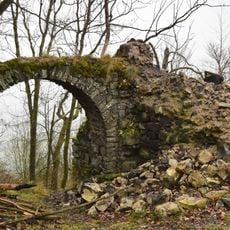
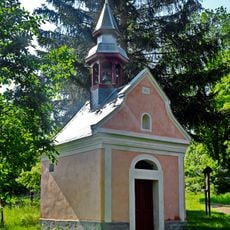
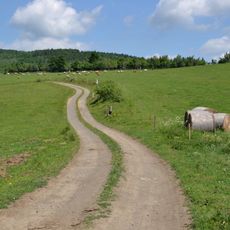
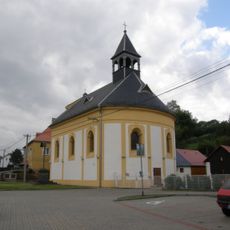
Two paths lead up to the castle: the shorter one ends at the reconstructed Zámecká brána (chateau gate), while the other opens onto the castle courtyard with a view of the tower. The site lies about three kilometres west of Stráž nad Ohří, reached via the E442/road No. 13 turning off at Horní Hrad. Above the chateau, a hill at 465 m holds the Hornohradská kaple with a botanical garden and arboretum founded in 1971.
The wooden statue of St. Wenceslas in the hilltop Hornohradská chapel was made by pilgrim Petr "Hroch" Binder for his 2007 journey to the Vatican, where the pope blessed it. Only one wooden bench survives from the chapel's original interior.
The community of curious travelers
AroundUs brings together thousands of curated places, local tips, and hidden gems, enriched daily by 92,522 contributors worldwide.