Hřídelík, Rock castle ruin in Blíževedly, Czech Republic
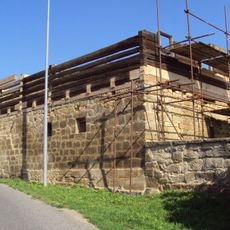
Hřídelík is a rock castle ruin on a steep sandstone block at the southern edge of Blíževedly. A circuit wall survives to about half a metre around the small summit, where the walls of a rectangular palace stand; the palace is entered only through an 18-metre-long bent underground passage with a Gothic profile. Carved covered spaces and overhangs lie in the southeastern part of the rock.
Hřídelík was probably founded by the Berka of Dubá before 1300; a burgrave Martin of Hřídelík is documented in 1292, and the first written mention dates from 1334. In 1375 Archbishop Jan Očko of Vlašim bought it, and it served as a prison for priests condemned by the Prague archdiocesan court. It was damaged and abandoned during the Hussite wars.
The name Hřídelík comes from the Czech word for a shaft or spindle, referring to the sandstone pillar the castle stands on. In 1395 the site was used as a prison for priests condemned by the ecclesiastical court of the Prague archdiocese, and plans were made to convert it into a Dominican monastery. Around 1850 the brick summer house built by Bishop Augustin Hille was abandoned, after which the hollowed rocks sheltered beggars and vagrants.
The castle ruins can be reached via marked hiking trails starting from Blíževedly village, with parking available for visitors. The site has uneven terrain, so sturdy hiking footwear is recommended for safe exploration.
The castle builders ingeniously incorporated the natural rocky formations directly into the fortress walls, using the existing stone as an essential structural component. This clever approach made the defenses stronger and more difficult to breach during attacks.
The community of curious travelers
AroundUs brings together thousands of curated places, local tips, and hidden gems, enriched daily by 92,143 contributors worldwide.