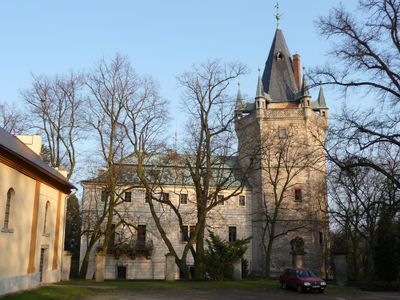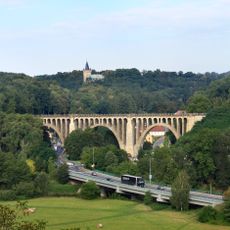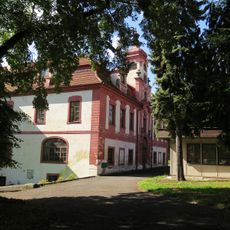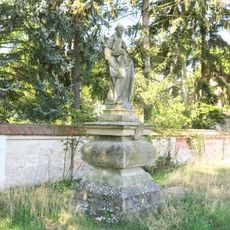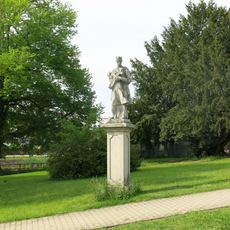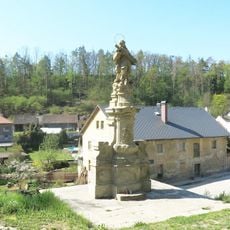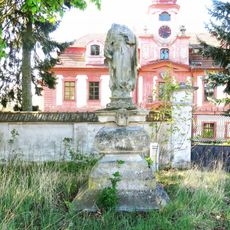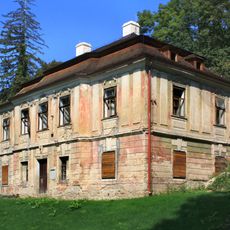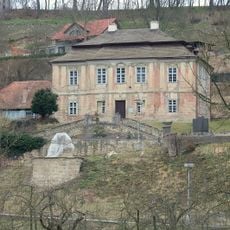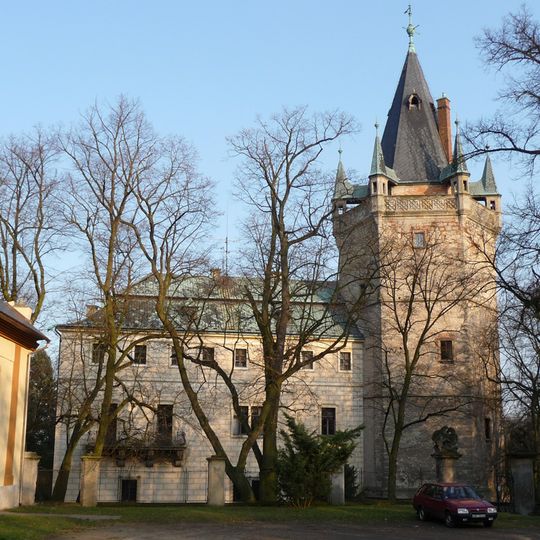
Stranov, Renaissance Revival château in Jizerní Vtelno, Czech Republic.
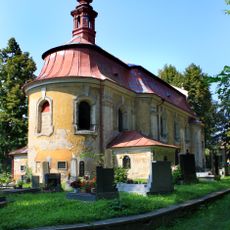
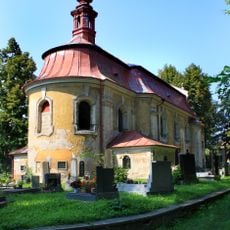
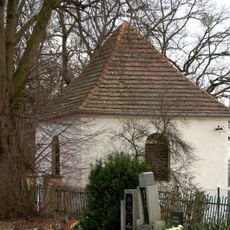
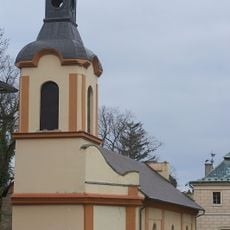
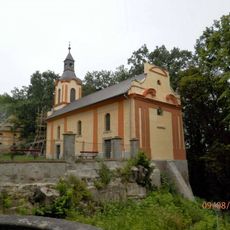
Stránov is a château in Jizerní Vtelno near Mladá Boleslav, rebuilt from a medieval castle into a Neo-Renaissance residence to the design of architect Josef Schulz. Builder J. Mráz carried out the 1890–1894 conversion for Marie of Valdštejn and Vartenberk, giving the building its romantic silhouette. In the forecourt stands the Church of St Wenceslas, built in 1767 to a design by Filip Heger.
A fortress on the site is first mentioned in 1429, when Bohuněk of Stránov held it. Jaroš of Sovojovice built a Gothic castle called Nový Stránov there between 1463 and 1468. The Berka of Dubá family owned it from 1545 to 1589, and under the Bieberstein and Slavata families it was rebuilt as a Renaissance château. In 1890–1894 Josef Schulz designed its Neo-Renaissance reconstruction for Marie of Waldstein and Vartenberk, carried out by builder J. Mráz.
The château's name Nový Stránov comes from the Gothic castle built here in 1463–1468. Alžběta Lidmila, great-granddaughter of astronomer Tycho Brahe, spent much of her life at Stránov as wife of Rudolf Adam of Lisov. Since 2004 the interiors have opened to the public, and summer cultural and social events are held in the grounds.
Stránov stands in Jizerní Vtelno near Mladá Boleslav, with the Church of St Wenceslas from 1767 in the forecourt. The château opened to the public for the first time in 2004 and is still run by the Šimonek family, so some interiors and exteriors are under partial reconstruction; summer brings social and cultural events.
The château was first opened to the public in 2004, more than five centuries after the Gothic castle was built. Its interiors still carry insensitive postwar alterations, such as washrooms installed in the main ceremonial rooms and corridors during the children's home era.
The community of curious travelers
AroundUs brings together thousands of curated places, local tips, and hidden gems, enriched daily by 92,146 contributors worldwide.