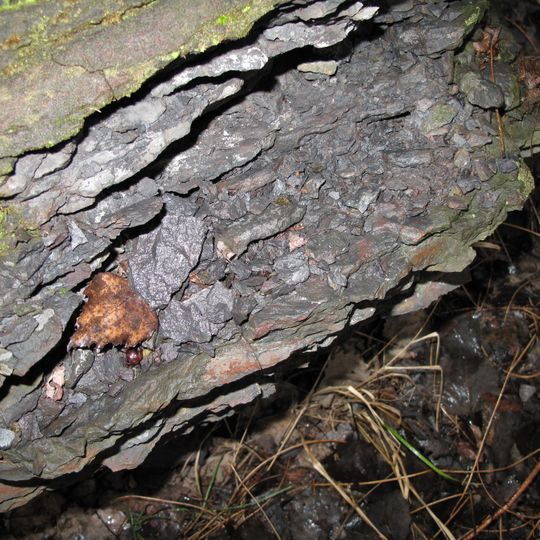
Ejpovické útesy, Natural monument near Dýšina, Czech Republic
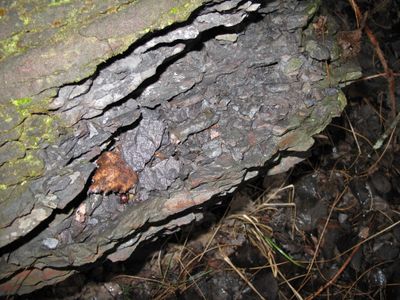
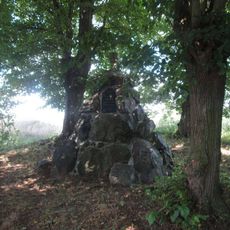
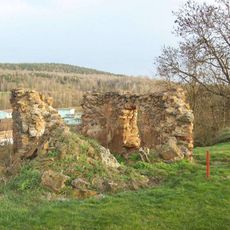
Ejpovické útesy is a body of silicite (buližník) uncovered in the northern wall of the former iron-ore quarry at Ejpovice, now partly flooded by the Ejpovice reservoir. The rock preserves a cliff face of the Lower Ordovician sea, with abrasion marks from wave action and films of organisms such as Berenicea vetera and stromatolites on the rock and nearby stones.
The protected area covers a silicite (buližník) body uncovered in the northern wall of the former iron-ore quarry near Ejpovice, a rock cliff on the shore of the Lower Ordovician sea. It is the world's oldest site of autochthonous Lower Ordovician fauna, with organisms preserved as coatings on the rock and nearby stones, including Berenicea vetera and stromatolites.
The protected cliff is the world's oldest known site of autochthonous Lower Ordovician fauna, found in the flooded Ejpovice reservoir quarry. Visitors can look for crusts of the bryozoan Berenicea vetera on the coastal rock knob and on surrounding stones, and for stromatolites, which are rare here.
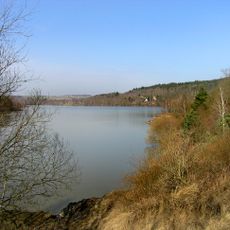
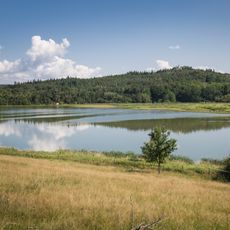
No marked trail leads directly into the protected area. A yellow-marked hiking route from Klabava to Ejpovice passes a few dozen metres from the former quarry, between the eastern shore of the Ejpovice reservoir and the Ejpovice water tunnels; local roads run closer to the quarry.
The flooded quarry belongs to the Ejpovice water reservoir, and the protected cliff is a body of silicite (buližník), not limestone, uncovered in the quarry's northern wall. It preserves a rocky shore of the Lower Ordovician sea, with organisms such as Berenicea vetera and stromatolites left as coatings on the rock.
The community of curious travelers
AroundUs brings together thousands of curated places, local tips, and hidden gems, enriched daily by 92,111 contributors worldwide.