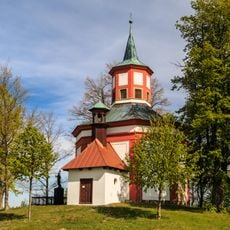
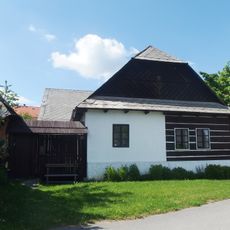
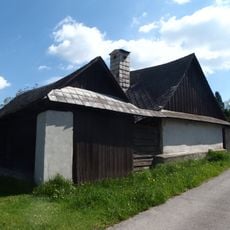
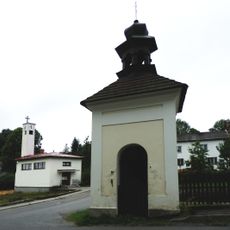
Bystré Castle, Renaissance château in Bystré, Czech Republic.
Bystré Castle is a Renaissance château built in 1586–1590 for Jan Bezdružický of Kolovrat, with a three-wing layout. Its grounds, 11 km southeast of Polička, combine the castle and farm buildings with a park; the site is a protected cultural monument and is not open to the public.
A fortress stood here by 1533 under the Žehušický family; Jan Bezdružický of Kolowrat had a three-winged Renaissance castle built in 1586–1590. Swedish troops damaged it in 1641, and Maximilián Valentin of Martinic enlarged it in 1654–1655, incorporating the old fortress into the farm buildings. In 1707–1712 Prince Jan Adam of Liechtenstein exchanged Bystré for the Vaduz estate, which became the principality of Liechtenstein.
Baroness Ernestina of Langet, the last Hohenems heiress, made the castle a cultural centre in the mid-19th century: theatre was staged, concerts were held, and Czech artists including Josef Mánes and Jan Neruda met here. She also laid out the English park on the site of the former fruit and vegetable garden.
The castle buildings stand 11 km southeast of Polička and are not open to the public; since the 1970s they have housed a social care home. The English park around them is freely accessible.
In 1707–1712 Prince Johann Adam of Liechtenstein traded Bystré to Count Jakob Hannibal of Hohenems for the imperial estate of Vaduz, which was then raised to the principality of Liechtenstein. The Hohenems line died out in 1759, and the estate later passed to the Habsburgs.
The community of curious travelers
AroundUs brings together thousands of curated places, local tips, and hidden gems, enriched daily by 92,757 contributors worldwide.