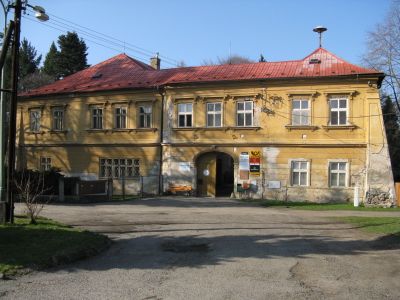
Bílá Lhota Castle, Classicist chateau in Olomouc Region, Czech Republic
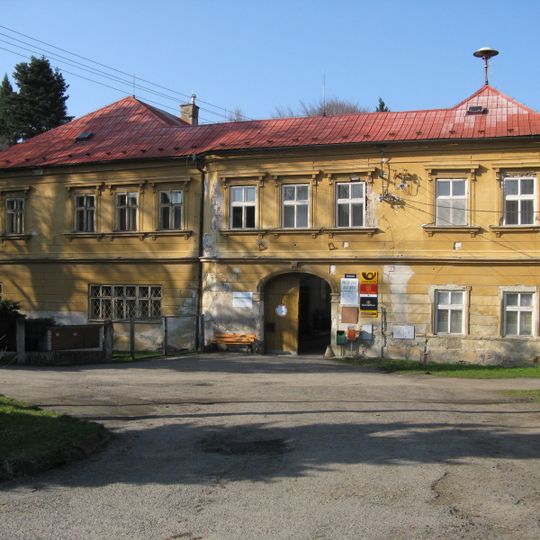
Bílá Lhota Castle is a four-winged stone structure with distinctive white exterior walls that incorporate Renaissance design elements throughout. The building combines architectural details from different periods and opens rooms where nobility once lived and worked.
The village of Bílá Lhota was first mentioned in 1356, held by the lords of Řimice. A fortress on the castle site is documented in 1437 under Ješek ze Lhoty; in the 1660s it was rebuilt into a Renaissance four-winged chateau for Jan Záviš Bítovský and his wife Kunka. Baroque alterations followed in the 1740s, and the present appearance dates from the early 19th century.
The castle's name, Bílá Lhota, combines "bílá" (white) with "lhota", a term for a village founded on newly cleared land. The building now houses the municipal office, post office, library and a health centre, and only the rooms serving the public are accessible.
The castle building itself is not a museum: it houses the municipal office, post office, library and a health centre, and only the public areas are accessible. The adjacent Arboretum Bílá Lhota, on the site of the former castle park, has been open to the public since 1968.
The castle building now houses the Bílá Lhota municipal office, post office, library and a health centre, while the adjacent arboretum in the former park is a separate national nature monument with over 300 species of trees and shrubs.
The community of curious travelers
AroundUs brings together thousands of curated places, local tips, and hidden gems, enriched daily by 94,120 contributors worldwide.