Church of the Assumption of the Virgin Mary, Baroque church in Polná, Czech Republic
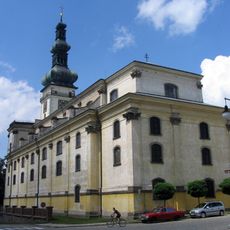
The Church of the Assumption of the Virgin Mary is a three-nave basilica built in 1700–1707 to a design by the Italian architect Domenico d'Angeli. It measures 63.53 m long, 26.54 m wide and 22.12 m high, with a separate tower 63.5 m tall. The five-axis west facade is divided by pilasters with Corinthian capitals, and a statue of the Immaculate Virgin stands in a niche above the main portal.
Leopold Ignác of Dietrichstein commissioned Italian architect Domenico d'Angeli to design a new Baroque church in 1699; the old church was demolished in 1700 and the remains of St. Liguriáš carried to St. Anne's. Masses were held in the unfinished shell from 21 November 1705, and the church was consecrated 8–13 September 1707. Work stopped after Leopold's death in 1708 and was finished under his brother Walter Xaver in 1713; the tower followed in 1715.
The church holds ten altars; the main one, with the Assumption image, was commissioned in Vienna by Leopold Dietrichstein and is attributed to Martin Altomonte. A tin baptismal font from 1617 by Lukáš Gleixner survives from the Protestant period, and nativity scenes are exhibited at Christmas.
The tower, rebuilt in 1895 to František Schmoranz's design, stands 63.5 m tall with walls 1.85–3 m thick across six floors. The church itself measures 63.53 m long, 26.54 m wide and 22.12 m high. The Ecclesiastical Museum has occupied part of the church since 25 August 2012.
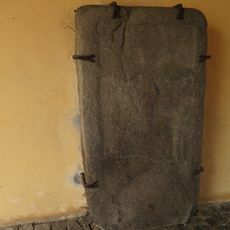
The stone floor of the main nave, laid in 1713, was made from old tombstones; workers walled most graves into the old site and broke the rest into tiles. The remains of the Žejdlic family of Šenfeld lie beneath it, and their theft by workers of Antonín Sucharda's firm in 1898 was investigated until 1916.
The community of curious travelers
AroundUs brings together thousands of curated places, local tips, and hidden gems, enriched daily by 92,395 contributors worldwide.