Fulštejn Castle, Medieval castle ruin in Bohušov, Czech Republic
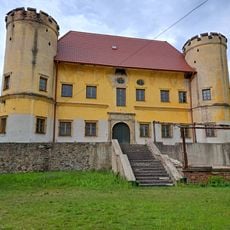
Fulštejn is a large castle ruin in the cadastral area of Bohušov, Bruntál District. Its core was completed in 1255 on the site of earlier ramparts of a prehistoric hillfort. Surviving features include the remains of a round tower, a gate, a bridge, massive ramparts and ditches.
Fulštejn was founded in the first half of the 13th century on the site of an earlier prehistoric hillfort at the initiative of Olomouc bishop Bruno of Schauenburg; its core was completed in 1255. In January 1476, during the Bohemian–Hungarian wars, it was captured by the troops of Hungarian king Matthias Corvinus and had to be almost entirely rebuilt by the end of the 15th century. Swedish forces blew it up when they left in 1648, and after 1668 it was abandoned as the owners moved to the chateau at Slezské Rudoltice.
The castle and the village of Bohušov were granted as a fief to Herbord of Fulštejn in 1255, and the ruin still carries his family name. In 1566 Jiří of Fulštejn sold the estate to his brother-in-law Václav Sedlnický of Choltice for 29,000 thalers.
The ruin stands on a hill above Bohušov in the Osoblaha valley; the site is reached on foot and the terrain is uneven, with surviving ramparts, ditches and the remains of a round tower, gate and bridge. Sturdy shoes are advisable and the ground can be muddy after rain.
The castle core was completed in 1255, and half of the castle with the village of Bohušov was granted as a fief to Herbord of Fulštejn with the consent of the Olomouc chapter. In 1275 the bishop sold the other half to Herbord's descendants Ekerik and Jan for 300 hřivnas of silver and their renunciation of shares in the town of Osoblaha, a contract confirmed by King Přemysl Otakar II.
The community of curious travelers
AroundUs brings together thousands of curated places, local tips, and hidden gems, enriched daily by 92,430 contributors worldwide.