Křižanov Castle, Renaissance Revival château in Křižanov, Czech Republic.
This Renaissance Revival castle features a rectangular main building with an interior courtyard, surrounded by well-maintained park areas and landscaped gardens that have evolved over centuries to enhance both aesthetic appeal and functional use.
A castle built around 1240 by Přibyslav of Křižanov preceded the château; it was destroyed in the Hussite and Czech-Hungarian wars. In 1464 the ruins passed to Jan II of Pernštejn, whose family held Křižanov until 1562, when Vratislav II ceded it as deserted to Zdeněk Lhotský of Ptení, who had a Renaissance château built on the site. A fire in 1710 led to a Baroque reconstruction between 1711 and 1720, and from 1866 the Teuber family had it altered in a Neo-Renaissance style.
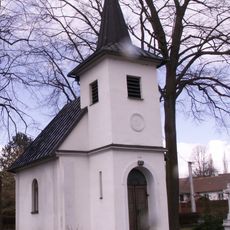
The castle has served as an institute for physically disabled youth since 1960, and since 1949 it has been in public hands. Its grounds also include the nearby Chapel of St. Barbara, and together with the park the complex is protected as a cultural monument of the Czech Republic.
The château stands in the northern part of Křižanov, in the Žďár nad Sázavou district, together with its park and the nearby Chapel of St. Barbara. Since 1960 it has served as an institute for young people with disabilities, so the interiors are not open to the public as a museum.
From 1960 the castle served as an institute for physically disabled youth, a use that continues today. The castle library also preserves a set of Masonic writings from the era of Jan Karel Endsmann, who bought the estate and from 1818 held the predicate of Ronov.
The community of curious travelers
AroundUs brings together thousands of curated places, local tips, and hidden gems, enriched daily by 94,231 contributors worldwide.