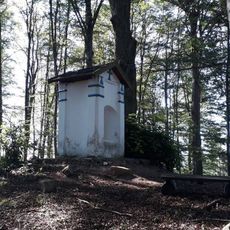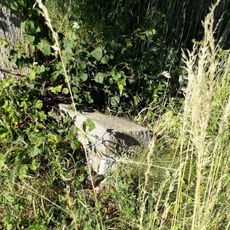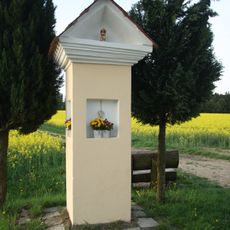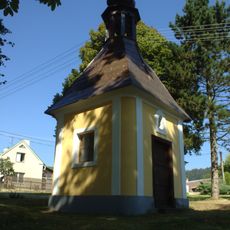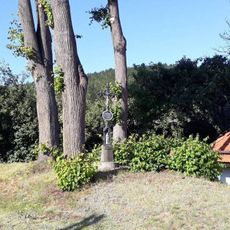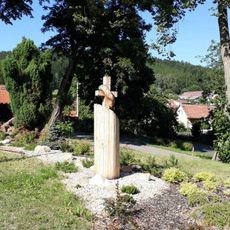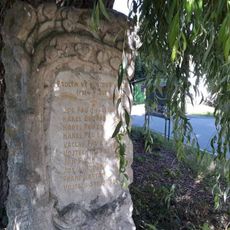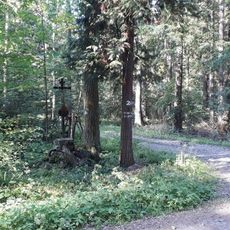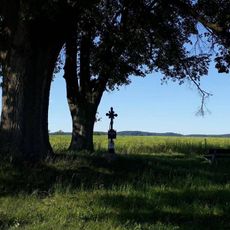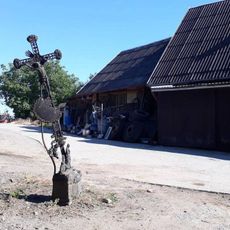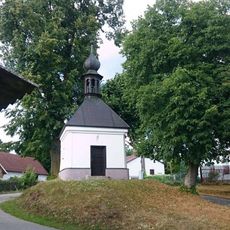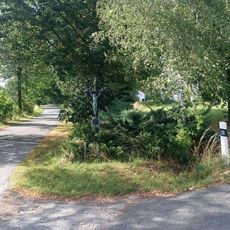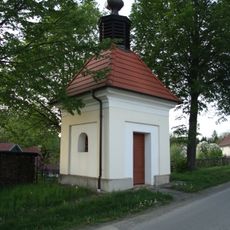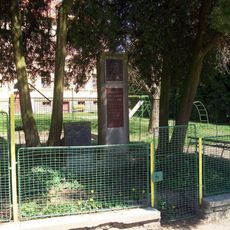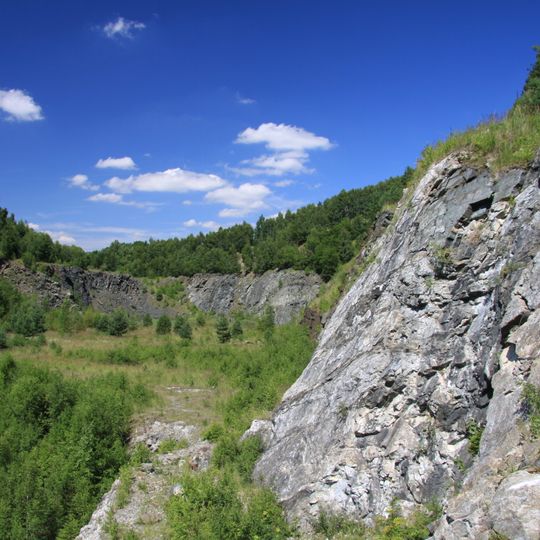
Pacova hora, Nature reserve in Dolní Hořice, Czech Republic.
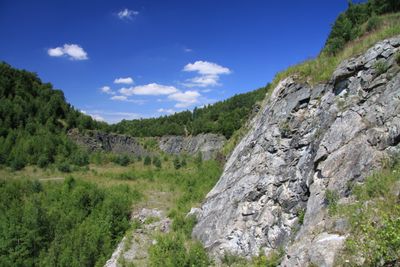
Pacova hora is a nature reserve on the site of a former limestone quarry four kilometres north of Chýnov in the Tábor district. Quarrying left several terraces: the lowest is wooded, the third holds a roughly 0.3-hectare pond about one metre deep, and the two upper terraces are smaller and harder to reach.
Lime burning at Pacova hora is first documented in 1488, when Jindřich Hradecký paid Deštná residents to haul limestone to Chýnov. A first kiln went up in 1848, followed by larger ones in 1863, 1869 and 1878; about 100 people worked the site. Quarrying ended in 1964, aggregate extraction in 1998, and the reserve was declared on 22 November 2002.
Chýnov lime from Pacova hora was sold as CHÝNOMIT, a magnesium-lime plaster for facades; houses coated with it often carried an enamelled plate reading "Omítnuto CHÝNOMITEM, nezničitelnou omítkou" (plastered with CHÝNOMIT, indestructible plaster). Bricks were also fired in round kilns here.
The reserve lies 4 km north of Chýnov near Dolní Hořice, with a 50 m buffer zone reaching Chýnovská jeskyně and the Chotčinský potok. Quarrying left several terraces: the lowest is wooded, the third holds a roughly 0.3 ha pond about 1 m deep, and the first two are smaller and harder to reach. Surrounding farmland is fertilised intensively.
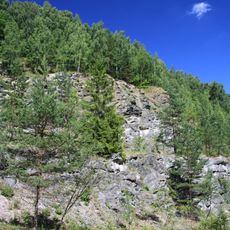
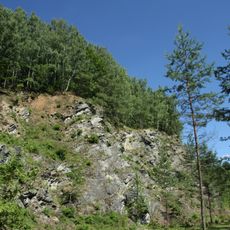
The quarry's exposed rock faces reveal a mineralogical composition that made Pacova hora a notable site for mineralogy, a detail visitors often overlook when focusing on orchids and amphibians. The limestone was extracted on both the Schwarzenberg estate and the villagers' land of Dolní Hořice.
The community of curious travelers
AroundUs brings together thousands of curated places, local tips, and hidden gems, enriched daily by 92,773 contributors worldwide.