Pohansko, Medieval hillfort archaeological site in Břeclav, Czech Republic
Pohansko is a Great Moravian hillfort of the 9th century covering up to 55 hectares, built on a rise between branches of the Dyje river, about 2 km south of Břeclav. Its three parts—a 27-hectare centre and southern and northern baileys—were enclosed by a rampart with a front stone wall 1,950 metres long. In the centre, a palisaded manor measuring 96 × 86 metres contained a stone church and a cemetery of about 400 graves.
Pohansko was built in the 9th century on a rise between arms of the Dyje, which then flowed further east. It is thought to have been the seat of a member of the ruling Mojmírid family and his retinue. After the Hungarian invasion of the 10th century, the Great Moravian centres, Pohansko among them, disappeared almost at once, though the site itself saw no fighting.
The name Pohansko likely dates only from the modern era; some scholars call the site Loventingrad, after the 11th-century German name for Břeclav, Laventenburch. Excavations have yielded typical Great Moravian jewellery such as gombíky buttons, a ring, earrings and an enamel-decorated belt end, plus evidence of pottery, ironworking, blacksmithing and leatherworking.
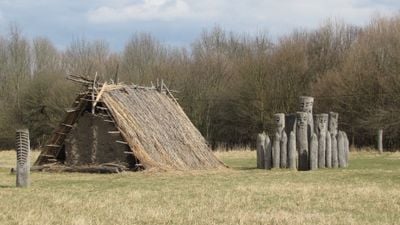
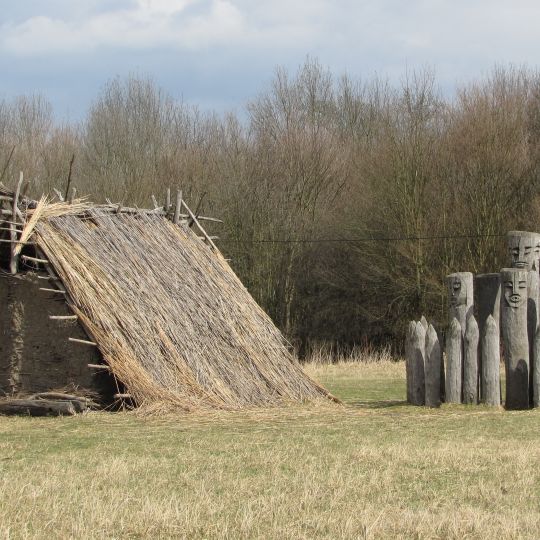
The hillfort lies about 2 km south of Břeclav in the floodplain meadows and woods; the grounds are reached on foot or by bike. The central area covers 27 ha and the whole site up to 55 ha, so allow time to walk between the rampart, the lodge and the reconstructed Great Moravian semi-sunken dwelling, cult object and well near the lodge.
The Empire-style hunting lodge on the southern edge of the hillfort was built in 1810–1812 to a design by Josef Hardmuth. After a large reconstruction it reopened in 1998 as an archaeological exhibition. Nearby, in 2003, Petr Dvořák led the reconstruction of a Great Moravian semi-sunken dwelling, a cult object and a well.
The community of curious travelers
AroundUs brings together thousands of curated places, local tips, and hidden gems, enriched daily by 93,791 contributors worldwide.