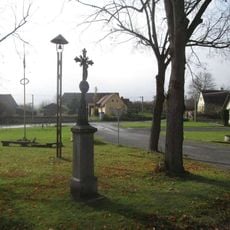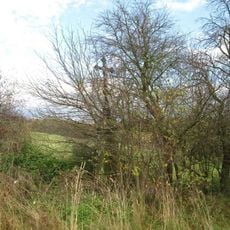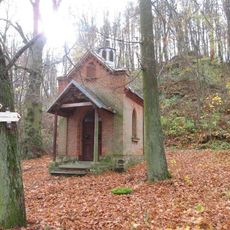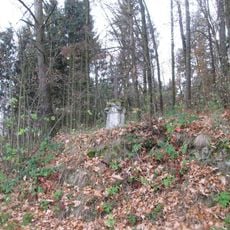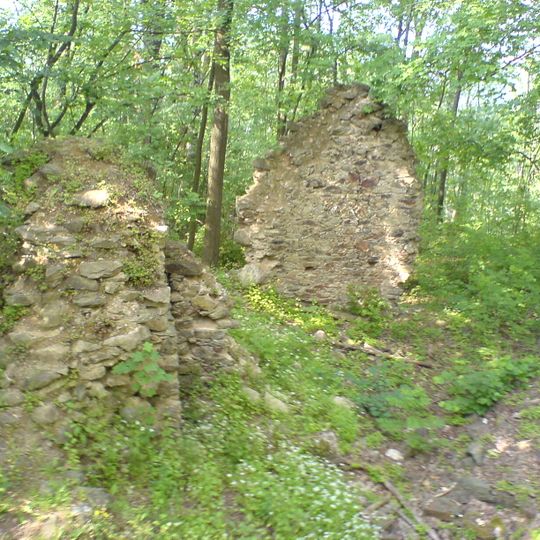
Pušperk Castle, Castle ruin in Pušperk, Czech Republic.
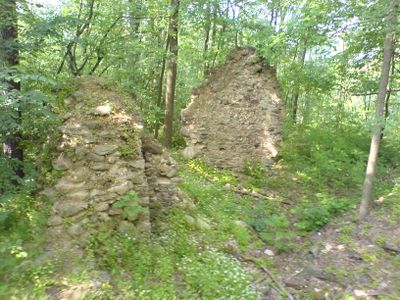
Pušperk Castle is a castle ruin situated on elevated ground in a small Czech village. The remaining stone walls and foundations show the layout of several medieval structures that once occupied the hilltop site.
Jaroš ze Slivna founded the castle around 1260 as Fuchsberg, named for the fox on his coat of arms, after fighting at Kressenbrunn. In 1434 Hussite troops backed by Klatovy townsmen took and demolished it. Břeněk of Ronšperk repaired it, but Klatovy forces destroyed it again in 1473, after which it was left in ruins.
The castle's original name, Fuchsberg, came from the fox on the coat of arms of founder Jaroš ze Slivna; it was Czechised to Pušperk within a few years, and he already used "von Puschperk" in 1264. A chapel to St Wenceslas was later built inside the ruined keep and stood until the Josephine reforms of the late 18th century.
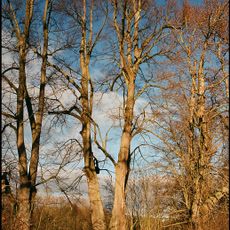
The ruin stands on the wooded hill Na Pušperské skále at 582 m, reached by a path climbing from the village of Pušperk. The site is unprotected and the terrain uneven, with a ditch and rampart around most of the perimeter. Only the tower torso, up to 6.5 m high, and fragments of the circuit wall about 260 m long survive.
The best-preserved part is the donjon, a rectangular tower measuring 23 by 15 metres and still standing up to 6.5 metres high. In a slot for its portcullis, a wooden board was found and dated by dendrochronology to 1355. A chapel of St Wenceslas was later built inside the tower's ruins.
The community of curious travelers
AroundUs brings together thousands of curated places, local tips, and hidden gems, enriched daily by 93,830 contributors worldwide.