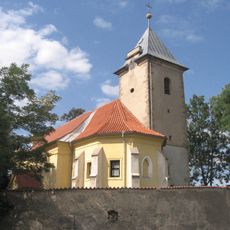
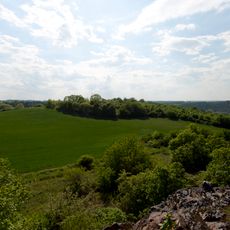
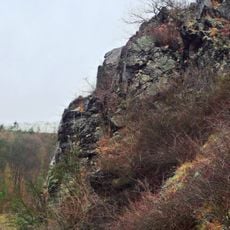
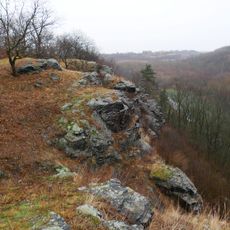
Sprašová rokle u Zeměch, Natural monument near Zeměchy, Czech Republic.
Sprašová rokle u Zeměch is an erosion ravine near the village of Zeměchy, carved into loess deposits by water flow over long periods. The steep walls display alternating bands of light and dark soil, revealing geological records from different time periods.
The ravine developed through erosion during successive ice ages and warmer periods, as water gradually cut deep channels into loess deposits. The layered soil sequence preserves a geological record spanning well over 100,000 years of climatic fluctuations.
Locals dug loess from the ravine into the late 1960s to smear the cracks in stone stoves, which weakened the walls and shrank the site. The slope was partly afforested around the mid-20th century and black locusts were planted, harming the steppe flora; the trees are now cut back repeatedly, with major clearances in 1980 and 2004.
You can reach the site on foot from the village square of Zeměchy by following the street called V rokli. Good walking shoes are recommended since the ground is uneven and the slopes are fairly steep.
The ravine is home to the sklípkánek pontický (Atypus muralis), a rare purseweb spider, and the snail suchomilka (Helicella striga), both steppe invertebrates found in the protected steppe remnants at the ravine edge. Loess was blown in here over more than 200,000 years, and the dark bands of buried soils record the alternation of glacial and interglacial periods.
The community of curious travelers
AroundUs brings together thousands of curated places, local tips, and hidden gems, enriched daily by 94,442 contributors worldwide.