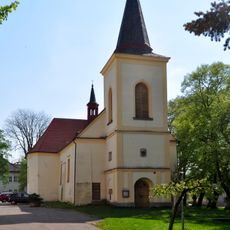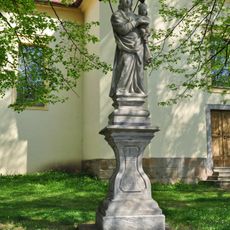
Spálené Poříčí, Gothic Revival château in Spálené Poříčí, Czech Republic
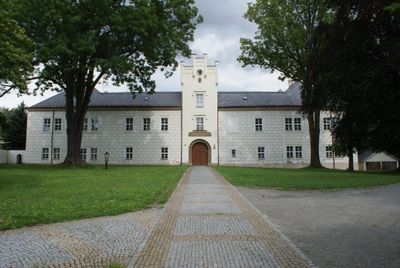
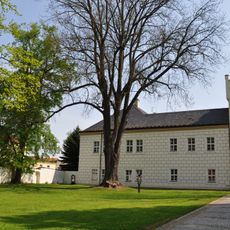
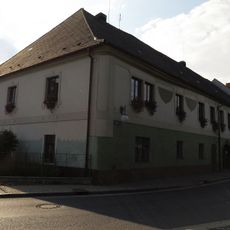
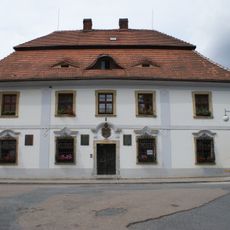
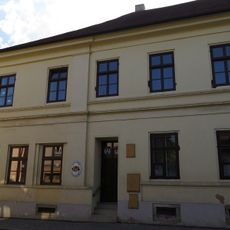
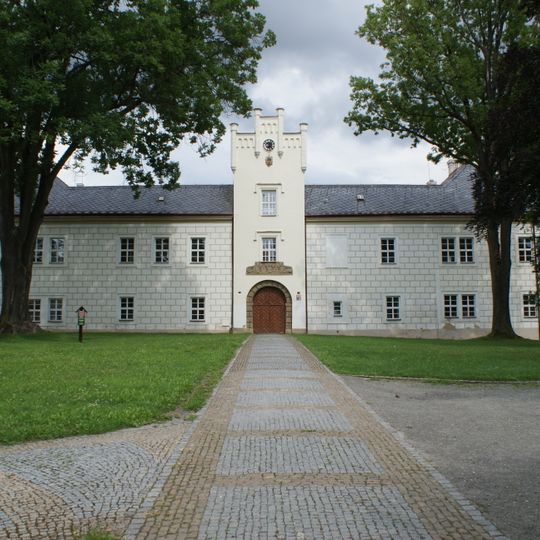
Spálené Poříčí is a château built around 1617 for Adam Vratislav of Mitrovice as a three-winged Renaissance building. In the late 18th century a Baroque east wing was added, closing the courtyard into four wings, and in the mid-19th century the entrance tower facing the square was reworked in Gothic Revival style.
The site began as a fortress and was converted into a Renaissance castle in 1617 by Adam Wratislaw of Mitrovice. After suffering damage during the Thirty Years War, it underwent repairs and changes, eventually passing to the Metropolitan Chapter of Prague's cathedral in 1749.
The château's name recalls the fire of October 1620, when General Buquoy's army set the town ablaze on its march to Prague, leaving it "Spálené" (burnt). Since 2016 the former Church Secondary School has moved to Plzeň, and the building now mainly serves as accommodation; a permanent exhibit, "Life in the Village in the Early 19th Century", shows period furniture.
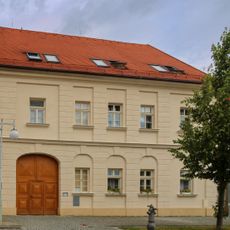
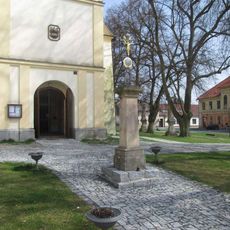
The château stands on the town square, its entrance tower facing the náměstí; the four wings enclose an inner courtyard. Since the church school moved to Plzeň in 2016, the building has served mainly as accommodation, so the museum exhibition on village life around 1800 and the period furniture are not always open.
During the Seven Years' War, the cathedral treasure of St. Vitus was temporarily stored in the château. The building gained its four-wing form with an enclosed courtyard only at the end of the 18th century, when a Baroque east wing was added; the entrance tower above the main portal was given its Gothic Revival form in the mid-19th century.
The community of curious travelers
AroundUs brings together thousands of curated places, local tips, and hidden gems, enriched daily by 92,166 contributors worldwide.