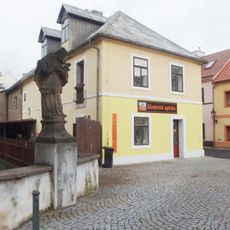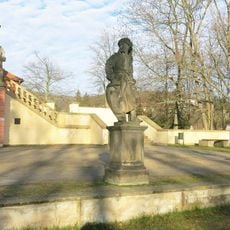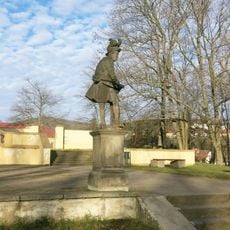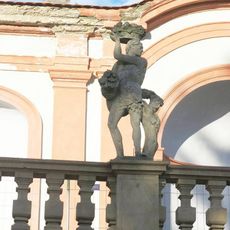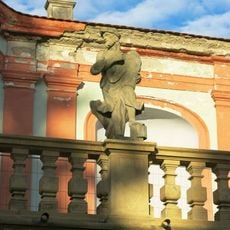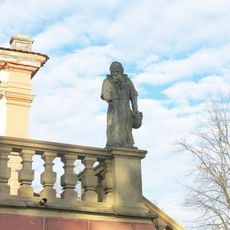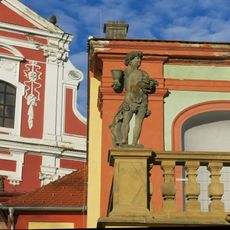
Porzellanmuseum Klášterec nad Ohří, Porcelain museum in Klasterec nad Ohri, Czechia.
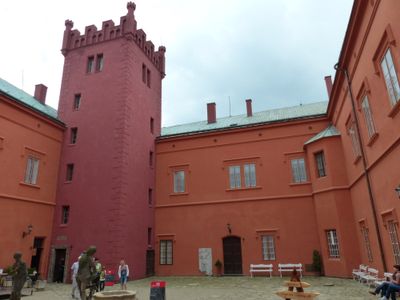
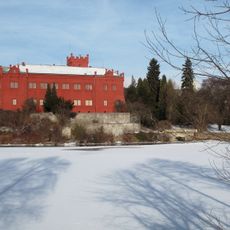
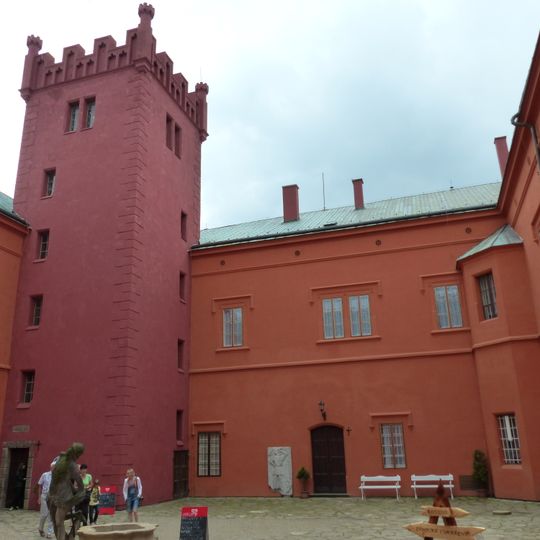
The Porcelain Museum of Klášterec nad Ohří occupies the castle of Klášterec nad Ohří, whose Renaissance interiors were restored in 1950–1952 to house the porcelain collection of Prague's Museum of Decorative Arts. The exhibition, about 12,000 objects, covers Chinese and Japanese porcelain, the beginnings of European production and the history of the local Thun factory, founded in 1794.
The porcelain factory was founded in 1794 by Johann Nikolaus Weber, a retired forester from Alsace, after kaolin-like clay was found near Černice. Count František Josef Thun let him build the first test kiln in a grotto of the castle park. Production was officially permitted on 22 November 1794, and the factory operated until 2024.
The collection began after 1885 with occasional acquisitions, among them part of Vojtěch Lanna Jr.'s famous collection, and grew systematically only after the First World War. Its core is European porcelain of the 18th to early 20th century, with the largest set of Czech porcelain in the country.
The museum is housed in Klášterec Castle, whose Renaissance interiors were restored between 1950 and 1952. The exhibition occupies several floors of the building, so allow time to move between levels. The porcelain factory in the town operated from 1794 until 2024.
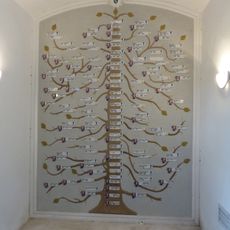
The Thun-Hohenstein family's own porcelain collection is not shown here: confiscated in 1945 as German property, it went to the National Museum in Prague. It is known for its set of spa cups. The museum's own holdings number about 12,000 pieces.
The community of curious travelers
AroundUs brings together thousands of curated places, local tips, and hidden gems, enriched daily by 92,112 contributors worldwide.