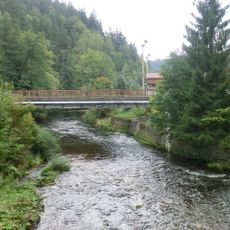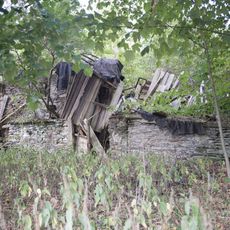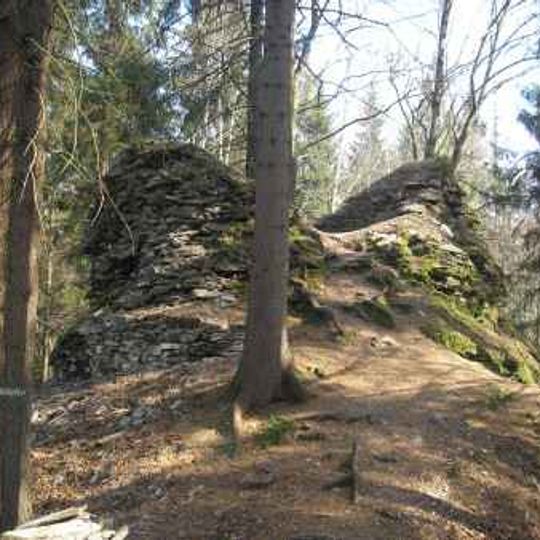
Nístějka, Castle ruin in Vysoké nad Jizerou, Czech Republic.
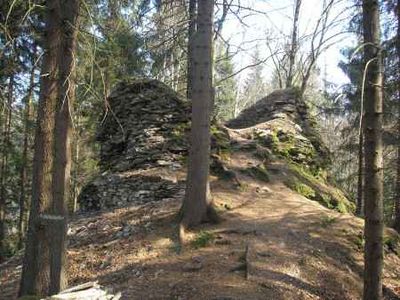
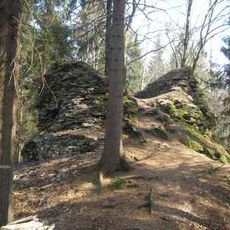
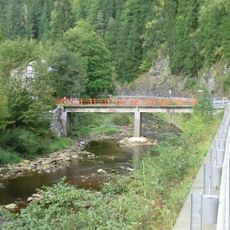
Nístějka is a castle ruin on a narrow rocky promontory above the confluence of the Jizera River and Farský Creek. A neck ditch with a fragment of front wall precedes a round bergfrit, behind which a two-room rectangular palace with two pillars stood; a bottle-shaped object cut into the rock may have been a cistern or grain pit.
The castle was probably built in the first half of the 14th century, likely by Heník of Valdštejn, who wrote his name after it from 1369, the year of the first written mention. In 1407 Jindřich of Vartenberk held it, and from 1422 it belonged to the lords of Jenštejn. Archaeological research in 1958 concluded that a fire in the second half of the 15th century caused the collapse of the palace; by 1519 it was listed as deserted.
The castle gave its name to the lords who held it: Heník of Valdštejn wrote "of Nístějka" from 1369, followed by Hynek in 1399 and Jindřich in 1406. The ruins are protected as a cultural monument and lie within the Nístějka nature reserve above the Jizera.
The site sits on a narrow and elevated terrain that requires sturdy footwear and careful footing when exploring. Visitors should allow time to walk the perimeter and appreciate the surrounding protected natural area.
The 1958 excavation by the North Bohemian Museum in Liberec, led by archaeologist Jaroslav Kavan, uncovered eight find layers in the palace area, including tiles with ornaments and small iron objects such as nails and staples. Kavan concluded from their sequence that a fire in the second half of the 15th century brought down all floors of the palace.
The community of curious travelers
AroundUs brings together thousands of curated places, local tips, and hidden gems, enriched daily by 92,248 contributors worldwide.