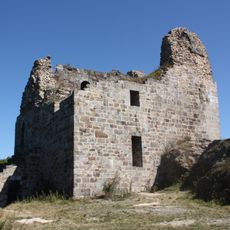
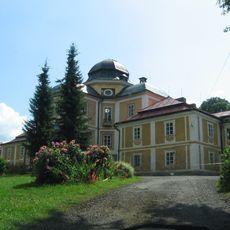
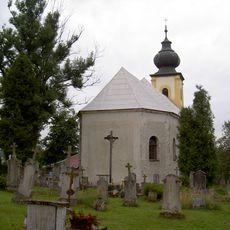
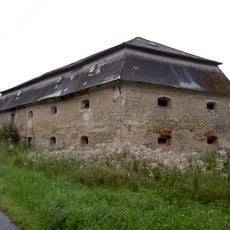
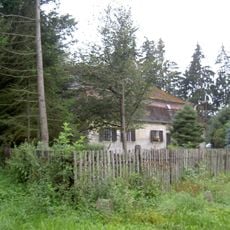
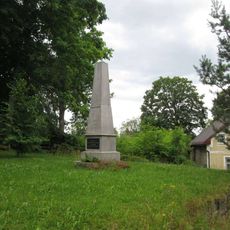
Church of Saint Apollonia in Svatá Apolena, Baroque church ruin in Přimda, Czech Republic
The Church of Saint Apollonia is a Baroque structure in Svatá Apolena that stands partially in ruins, retaining features from the 17th century. Its stone walls and architectural details are characteristic of religious buildings from that period in the Czech countryside.
A chapel dedicated to Saint Apollonia was first recorded in 1580 at a spring linked to healings of eye diseases. Count Georg Maximilian Lindelo had a church built there, consecrated in 1670. From 1938, masses were held outdoors because the building was already dilapidated, and the village of Svatá Apolena disappeared before 1960.
The place became a pilgrimage site where visitors came seeking recovery and relief, drawn by the reputation of healing water near the original chapel. This spiritual role shaped how local people viewed and used the location.
The ruin lies a few kilometres south of Přimda in the Tachov district, in the area of the vanished village of Svatá Apolena. The land belongs to the Civic Association Zvon from Bělá nad Radbuzou, which carries out rescue building work, so parts of the masonry may be closed off.
The association Zvon from Bělá nad Radbuzou, which owns the ruin, found in the archives a document from the second half of the 18th century in which Pope Pius VI allowed priests of all then-registered orders to celebrate services in the church.
The community of curious travelers
AroundUs brings together thousands of curated places, local tips, and hidden gems, enriched daily by 92,704 contributors worldwide.