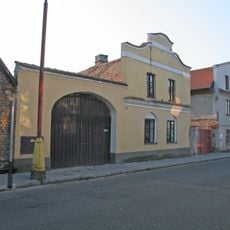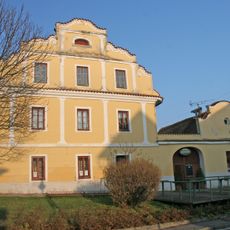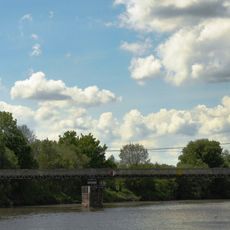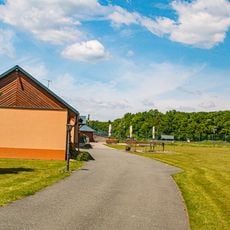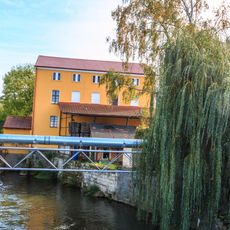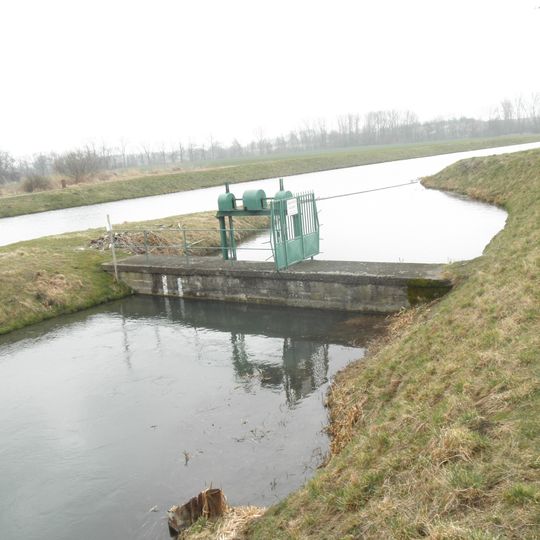
Halda, Canal in Bílé Předměstí, Czech Republic.
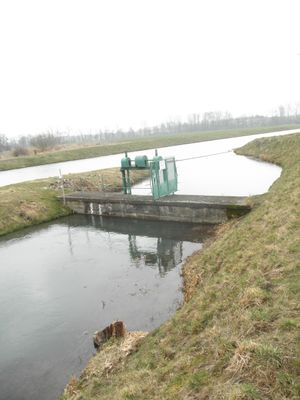
Halda is an artificial canal about 10 km long, built in 1495 to feed fishponds and the vanished Nový rybník, later powering Winternitz's mills. It drops only 0.5 m over its course. Near Úzké, a 16th-century earthwork dam, it runs within 75 cm of the Labe while lying about 5 m higher.
Halda, also called the Počáplecký water canal, was built in 1495 to feed fishponds and the vanished Nový rybník; it later drove the Winternitz mills. Because the Labe and Chrudimka lacked sufficient fall and the Labe water was poor, it was cut from the Loučná near Sezemice, with only 0.5 m of drop over about 10 km. The 16th-century Úzké dam, named in records from 1747, was built under the Pernštejns.
The name Halda, meaning "heap" or "dump," is used locally alongside Počáplecký vodní kanál. The canal still feeds the fishponds in Husova Street, known as Nové and Velké jezero, and a fixed weir before the bridge under Mezi mosty Street keeps the water level steady, with excess flowing into the overflow channel called požeračky.
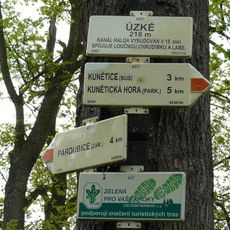
The red hiking trail 0438 from Pardubice Castle to Kunětická hora passes the Úzké embankment, reachable on foot from Park Na Špici or via an unpaved path from Židov along the Halda. The dam there was cleared of self-seeded trees in 1975. The canal itself is about 10 km long, so plan for a longer walk.
At a spot called Úzké, the canal runs within 75 cm of the Labe while its surface lies about 5 m higher; before the Pardubice weir was built in 1972 the difference was 8 m. The 16th-century embankment there had to be sealed with puddled clay so water would not seep into the river.
The community of curious travelers
AroundUs brings together thousands of curated places, local tips, and hidden gems, enriched daily by 92,356 contributors worldwide.