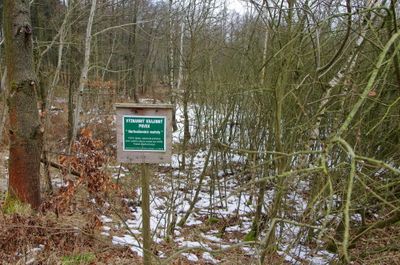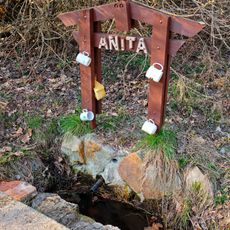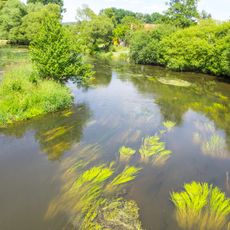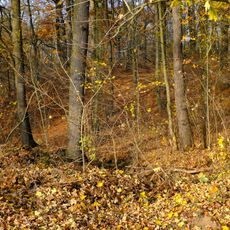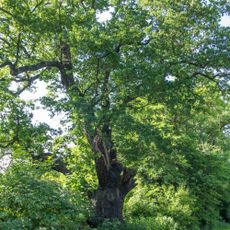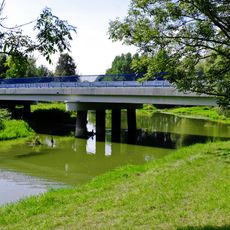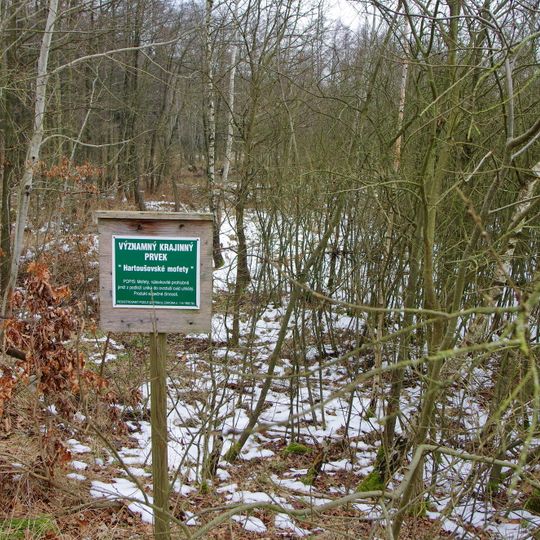
Hartoušovské mofety, Natural geological formation in Nebanice, Czech Republic.
Hartoušovské mofety are gas vents located along the Plesna River where carbon dioxide emerges from underground through saturated soil and water. These formations create visible disturbances in the landscape where pressurized gases from depths escape to the surface.
Scientific confirmation of the site came in 1958 when drilling revealed massive carbon dioxide flows from deep underground formations. This discovery established the location as an important example of ongoing volcanic-related activity in the region.
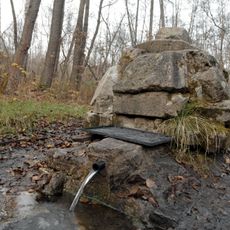
Georg Agricola, the 16th-century physician known as the father of mining, described the local spring Vztekloun in his 1545 book De ortu et causis subterraneorum, writing that it burst forth with a noise like awakening thunder. A local legend tells that a farmstead once stood here until the earth opened and swallowed it along with the farmer's wife; the water still boils and gurgles because no one put out the fire under her kettle.
Wooden boardwalks provide safe access to observe the gas vents, with information panels explaining the geological processes in several languages. The accessible paths allow visitors of all ages to walk through and understand the underground activity.
The escaping gas is 99.5% carbon dioxide, with the remainder nitrogen, oxygen and methane, and carries helium isotopes 3He and 4He at 1.8 to 4 per mille, a concentration rare on Earth and a sign the gas rises from great depth along the Hrzín fault.
The community of curious travelers
AroundUs brings together thousands of curated places, local tips, and hidden gems, enriched daily by 93,764 contributors worldwide.