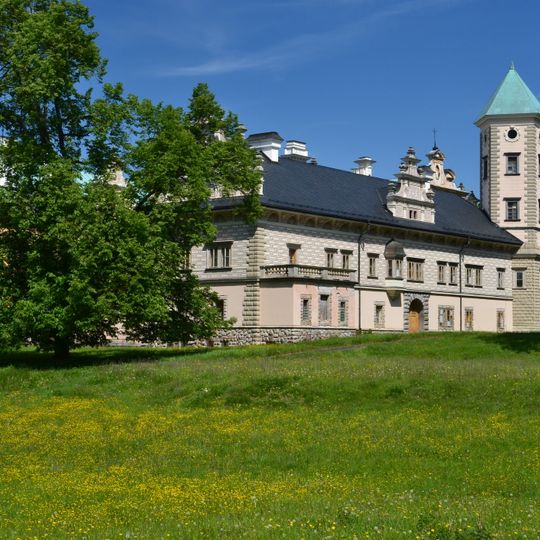
Stružná Castle, Renaissance Revival castle in Stružná, Czech Republic
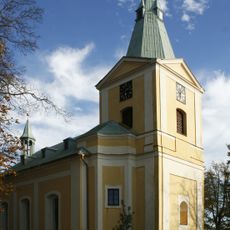
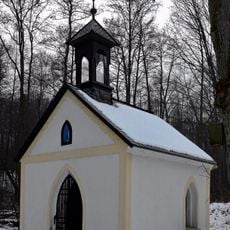
Stružná Castle consists of three wings grouped around a courtyard that holds a Renaissance fountain with a Neptune statue carried by bears. The east wing has a hexagonal corner tower, façades with rustication, a frieze of hunting scenes and the Černín coat of arms. The other two wings have a large prismatic tower, an arcaded gallery and a Neo-Gothic chapel; the front carries a portal with a loggia, balcony and gable.
A 15th-century fortress in the village's north part preceded the castle. Linhart Colona z Felsu founded a Renaissance castle before 1598; after his property was confiscated in 1621, General Heřman Černín z Chudenic bought Stružná, and his descendants had it rebuilt in Baroque style with architects M. Ceresola (1666), Francesco Caratti (1675–1676) and Giovanni Battista Alliprandi (1700–1701). A fire in 1811 was followed by a Neo-Renaissance reconstruction in the 19th century.
The name Stružná is also recorded as Kysibl. The Renaissance fountain in the courtyard, a Neptune statue carried by bears, survives from the castle's early phase. The east wing carries a frieze with hunting scenes and the Černín coat of arms, recalling the family that held the estate from 1621 and had it rebuilt in Baroque style.
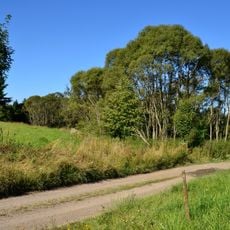
Neither the castle nor its adjoining park is open to the public, so visits cannot be arranged. A green-marked hiking trail from Andělská Hora to Horní Tašovice passes the grounds, and cycle route No. 2249 runs nearby along the southern edge of the Doupov Mountains.
The building displays precise craftsmanship in its detailed facades that have survived across multiple centuries. These elements reveal much about the skill of the workers who created them.
The community of curious travelers
AroundUs brings together thousands of curated places, local tips, and hidden gems, enriched daily by 93,617 contributors worldwide.