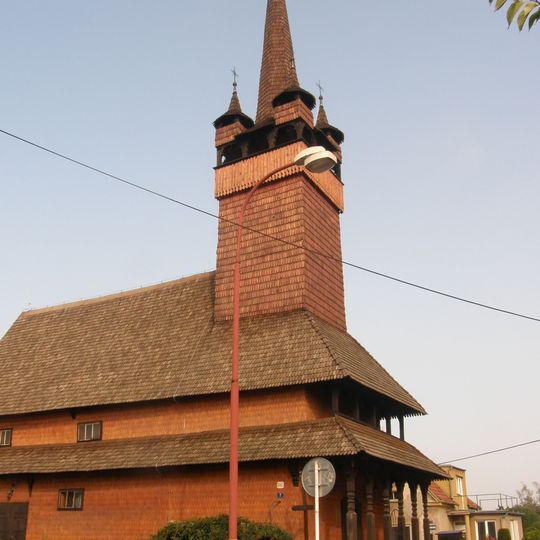
Church of Saint Paraskiva, Wooden Hussite church in Blansko, Czech Republic
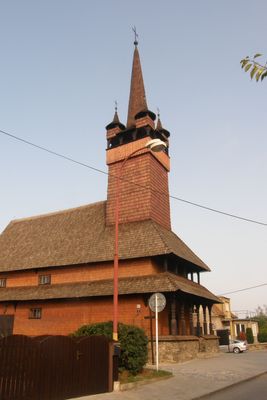
The Church of Saint Paraskiva is a wooden structure with hand-crafted details and traditional Orthodox design elements throughout its interior and exterior. The building features the characteristic spatial arrangement of an Eastern church with an iconostasis and altar positioned in the eastern end.
Built in the early 17th century in Nyžní Selyšče, near Chust in Subcarpathian Ruthenia, the church was completed on 29 July 1641, as an inscription in Church Slavonic records. It served the Greek Catholic parish for three centuries. In 1935 the Czechoslovak Hussite Church accepted it for Blansko; it was dismantled, moved by horse cart and rail in 1936, and consecrated there on 23 May 1937.
The church is now used by the Czechoslovak Hussite Church, which took it over in 1935 and had it consecrated on 23 May 1937 by Bishop Rostislav Stejskal. Its dedication recalls Saint Paraskeva, whose relics were moved to Iași in 1641, the year carved above the door. The carved door frame with spirals and rosettes is worth a look.
The church stands on a stone base added when it was rebuilt in Blansko, with the entrance beneath a two-storey porch and a 28-metre tower above it. The nave was lengthened during the move, so the interior is larger than the original Ruthenian building. Services of the Czechoslovak Hussite Church are held here, so time a visit around them.
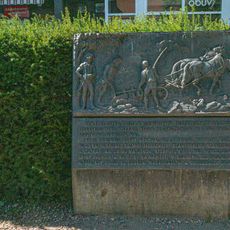
The church was moved from Nyzhnie Selyshche in Subcarpathian Ruthenia: dismantled in 1935, hauled by horse cart to Khust, then shipped on thirteen railway wagons to Blansko. A Church Slavonic beam inscription reads "built 29 July 1641", a week before the feast of Saint Paraskeva.
The community of curious travelers
AroundUs brings together thousands of curated places, local tips, and hidden gems, enriched daily by 94,243 contributors worldwide.