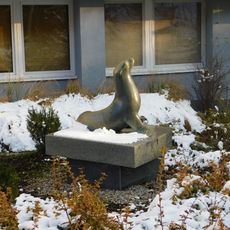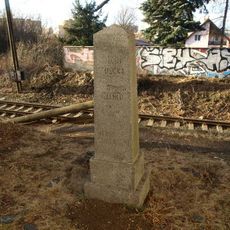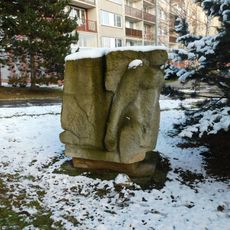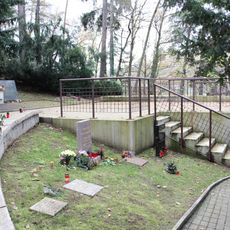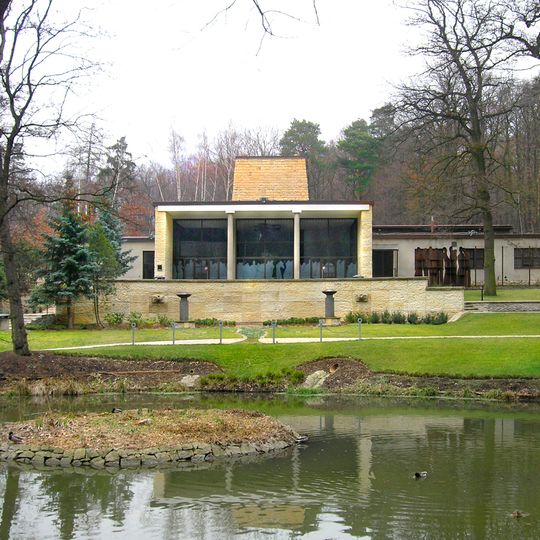
Krematorium Motol, Constructivist crematorium in Motol, Prague, Czech Republic
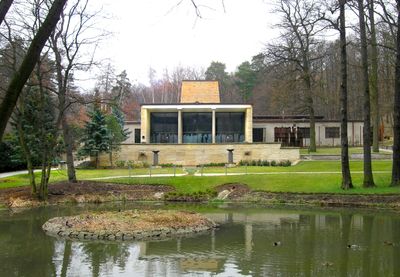
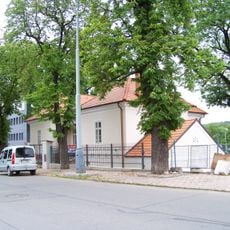
Krematorium Motol stands on a meadow below a wooded hill on Plzeňská Street in Prague 5, on a 12-hectare site with its own urn cemetery. The constructivist complex by Josef Karel Říha, built from 1951 and opened in 1954, centres on a ceremonial hall whose interior was decorated in the 1960s with the wall painting "Život a smrt". A two-part sliding etched glass wall of 1986 shows mourners and creates a new image when its motifs overlap.
The building was completed in 1954 by architect Josef Karel Říha, introducing constructivist design principles to Prague's funeral facilities. It was built during the post-war period when the state developed new approaches to cremation infrastructure.
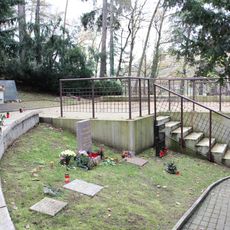
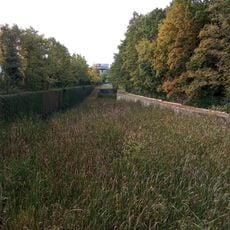
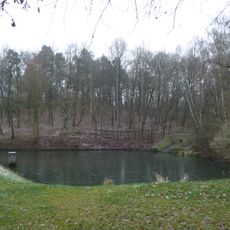
The urn grove was laid out as a forest cemetery with a scattering meadow around a small pond. In 1999 the Documentation Centre of the Confederation of Political Prisoners found records that the ashes of political prisoners executed in the 1950s had been buried in shared graves there; an honorary burial ground opened and was consecrated on 20 May 2000.
The crematorium stands on Plzeňská Street in Motol, on a meadow below a wooded hill, with its own urn grove laid out as a forest cemetery around a small pond. The grounds cover 12 hectares, so allow time to walk between the ceremonial hall, the columbarium and the scattering meadow. The site is owned by the City of Prague and run by its Funeral Institute.
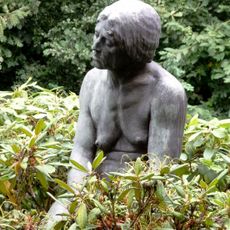
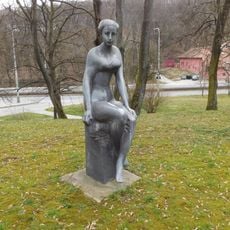
The bronze nude "Dohasínající krása" by Vilím Amort, moved here from the Prague City Gallery depository, caused embarrassment in the memorial setting, so a shrub and a tree were planted around it and largely hide it from view. The etched glass wall of 1986, with its two sliding panels, creates a new visual effect when opened as the motifs overlap.
The community of curious travelers
AroundUs brings together thousands of curated places, local tips, and hidden gems, enriched daily by 92,681 contributors worldwide.