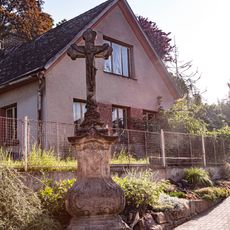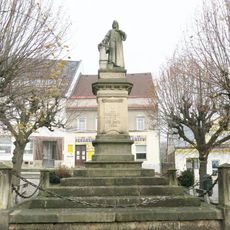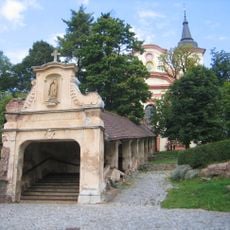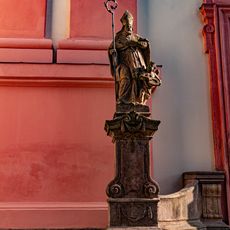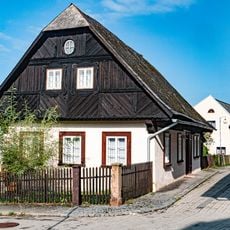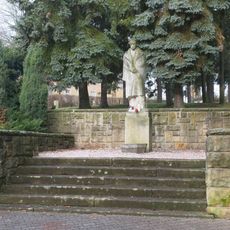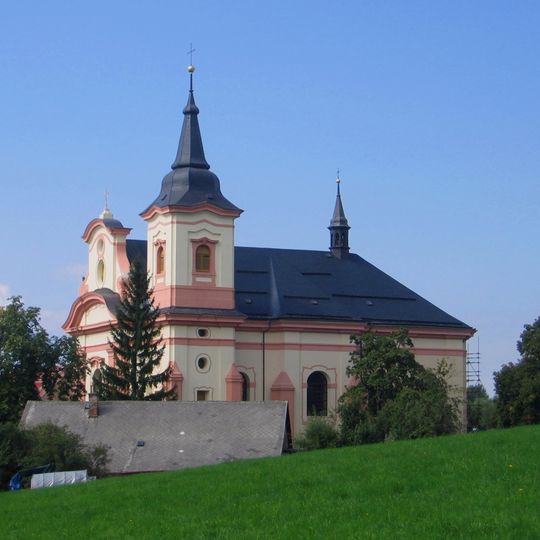
Klášter paulánů, Monastery in Nová Paka, Czech Republic.
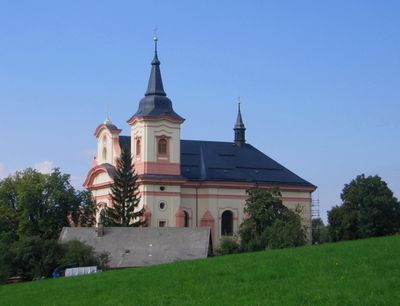
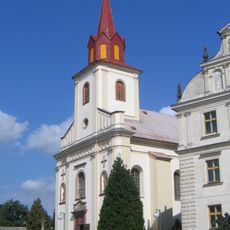
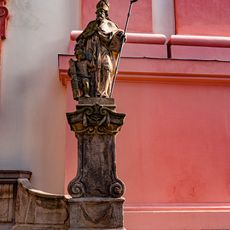
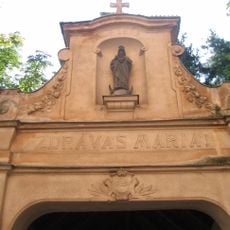
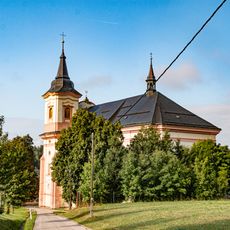
The Pauline Monastery in Nová Paka consists of plain, multi-storey convent buildings with unadorned facades that enclose a square cloister courtyard on three sides; the fourth side is formed only by the ambulatory. The adjoining Church of the Assumption of the Virgin Mary is a single-nave, non-oriented structure on a rectangular plan with chamfered corners, its nave about 41 metres long and divided into five bays. The south facade has paired pilasters, a segmental tympanum and a gable with niches and statues of saints.
Rudolf of Tiefenbach, owner of the Kumburk estate, left funds to the Paulines in his 1650 will and bound his heirs to build the monastery. His widow Marie Eva had foundations dug by the old chapel, and the cornerstone was laid on 25 June 1655. The first friars moved in only in 1701; the larger Church of the Assumption was begun in 1709 and consecrated in 1724. Joseph II's reforms dissolved the monastery in 1785.
The monastery's name comes from the Pauline order, whose monks moved in only in 1701, 46 years after the foundation stone was laid in 1655. The site had long been a pilgrimage destination tied to a small statue of the Virgin Mary, probably from around 1500, now the centrepiece of the main altar.
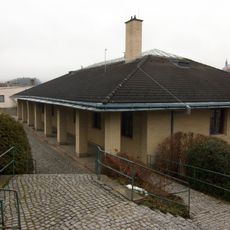
The monastery complex stands west of the church, whose single nave is about 41 metres long. The buildings now belong to the association Život bez bariér, which is converting them into a community centre and social services base; the rosary staircase in front of the church was restored at a cost of 4.3 million CZK after being declared dilapidated in 2019.
The monastery church has a single 41-metre nave with five intersecting oval bays, a layout counted among the most advanced late-Baroque interiors in the Czech lands. Its architect is unknown; experts most often name Kryštof Dientzenhofer, sometimes Tomáš Haffenecker.
The community of curious travelers
AroundUs brings together thousands of curated places, local tips, and hidden gems, enriched daily by 92,632 contributors worldwide.