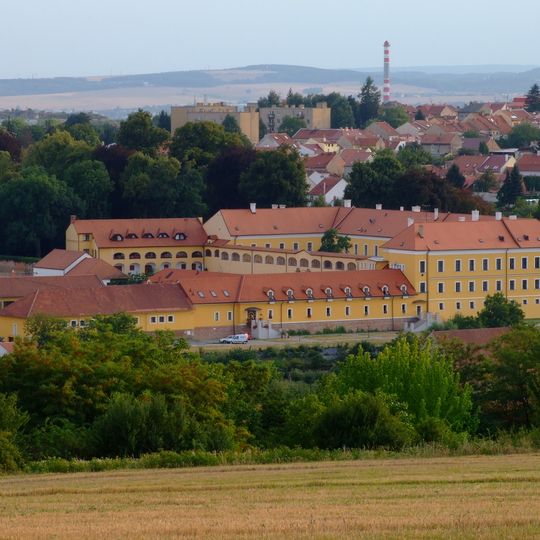
Líšeň Chateau, Baroque chateau in Líšeň, Czech Republic.
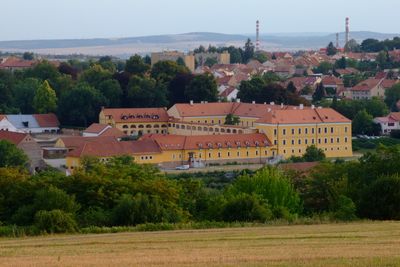
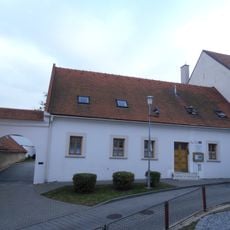
Lisen Chateau is a baroque manor house from the 18th century with white exterior walls, symmetrical wings, and ornately detailed window frames. The building sits within well-maintained gardens that form an integral part of the overall composition.
A Renaissance fortress from the early 17th century stood on this site until 1714, when Jan Kryštof of Freyenfels acquired the Líšeň estate and began building a new chateau, probably designed by Christian Alexander Oedtl. The chapel was added around 1724 or 1727, and the Belcredi family, who inherited the estate in 1819, had it remodelled in Neoclassical style. The family held it until 1949, when the Czechoslovak state confiscated it; it was returned in 1992 and later restored.
The Belcredi family, who inherited the estate in 1819, left their mark on the chateau: above the balcony portico the under-roof cornice carries their coat of arms and the motto "Et a Domino factum est istud". Since 1967 the chateau has had a ceremonial hall, and after restitution in 1992 and reconstruction it now serves as a hotel and venue for cultural and social events.
The chateau stands in the centre of Brno-Líšeň, east of the square, with the farmyard buildings adjoining its eastern side. The grounds are now run as a hotel and venue for cultural and social events, so visits depend on the current programme rather than fixed sightseeing hours.
The 1.5-hectare park south of the chateau was converted from a formal baroque garden into a landscape park before 1826, yet kept its original layout and two avenues. In 1985 Karel Hieke recorded 8 conifers and 44 broadleaf trees here, among them a cut-leaf beech and a 'Wareana' thuja.
The community of curious travelers
AroundUs brings together thousands of curated places, local tips, and hidden gems, enriched daily by 94,119 contributors worldwide.