Zámek Nová Bystřice, Cultural monument in Nová Bystřice, Czech Republic.
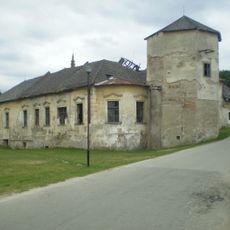
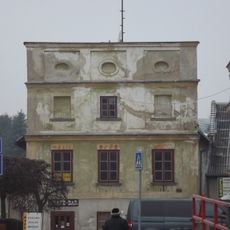
Zámek Nová Bystřice is a stone château positioned on elevated ground with rectangular walls and several towers defining its form. The windows are distributed symmetrically across the facade, creating a balanced appearance.
The castle was founded in the first half of the 14th century and first mentioned in 1341. From the 1380s it belonged to the Krajíř family, who rebuilt it after Jan Žižka's Hussite troops captured and burned it in 1420. A fire in 1607 destroyed the castle and part of the town; it was repaired in Renaissance style within three years. After another fire in 1774 it was only partly restored and served mainly economic purposes.
The château's name comes from the town of Nová Bystřice, first recorded as a castle in 1341. The Krajíř family held it from the 1380s until 1575, when it passed to the Lobkovic family; the Kinští and other noble families followed. A fire in 1607 led to a Renaissance rebuilding within three years.
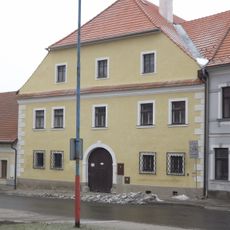
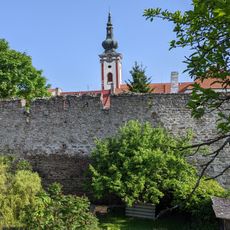
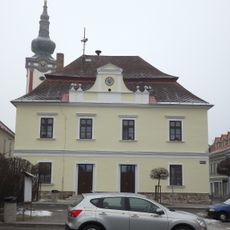
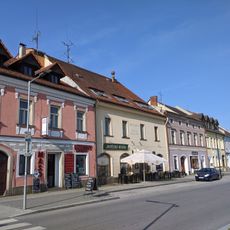
The old château stands behind the classicist new château, whose facade closes the eastern side of the square; the entrance passes through a Renaissance portal dated 1611. Fragments of Gothic masonry and a square tower are visible in its walls. The second floor was demolished in 1843 and the moats were filled in, so the building reads as a single low block from the square.
The 1611 Renaissance portal of the new château, built by Antonín Hochberg of Henersdorf, incorporates fragments of Gothic masonry, and traces of a square tower that once stood by the gate survive beside it. The portal leads into the first courtyard, on the site of the Gothic castle's outer bailey.
The community of curious travelers
AroundUs brings together thousands of curated places, local tips, and hidden gems, enriched daily by 92,784 contributors worldwide.