Augustinian monastery in Tábor, Augustinian monastery and cultural monument in Tábor, Czech Republic.
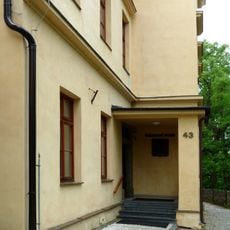
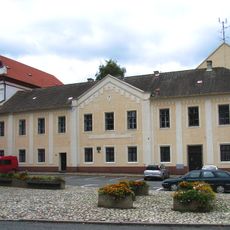
The Augustinian monastery is a building complex with a Classical Baroque façade that stands at Náměstí Mikuláše z Husi square in central Tábor. The complex now houses the city museum with various exhibitions focused on regional history.
The Barefoot Augustinians arrived in Tábor in 1640 and laid the foundation stone of the Church of the Nativity of the Virgin Mary on 8 September 1642. The monastery was built between 1642 and 1666 to plans by the Italian architect Antonio de Alfieri. Emperor Joseph II suppressed the convent in 1785; the last friar died in 1819. In the mid-19th century the buildings were converted into the city prison, which operated until the 1950s.
The monastery's chronicle records that the city welcomed the Barefoot Augustinians in 1640 to counter the memory of Jan Žižka, whom it calls the founder of a shameful place of heretics. The friars administered parishes in Chotoviny, Hoštice and Sudoměřice, and tended the dying during the plague of 1680. Their library and part of their archive were later moved to Lnáře.
The monastery stands on the western edge of the old town, on Náměstí Mikuláše z Husi, and its church faces the square rather than the customary east. The building was fully reconstructed by 2019 and now houses the Hussite Museum administration. The church interior holds a crypt under the floor, where nobles and burghers buried in the grounds were moved in 1708.
The renowned architect Antonio de Alfieri designed this complex and gave it its distinctive Baroque aesthetic. The Church of the Nativity of the Virgin Mary, located within the grounds, forms an architectural highlight of the ensemble.
The community of curious travelers
AroundUs brings together thousands of curated places, local tips, and hidden gems, enriched daily by 94,446 contributors worldwide.