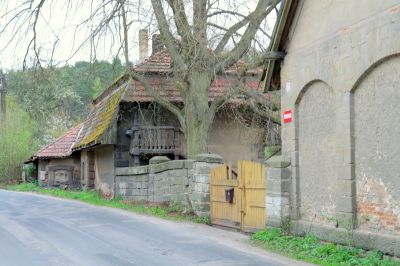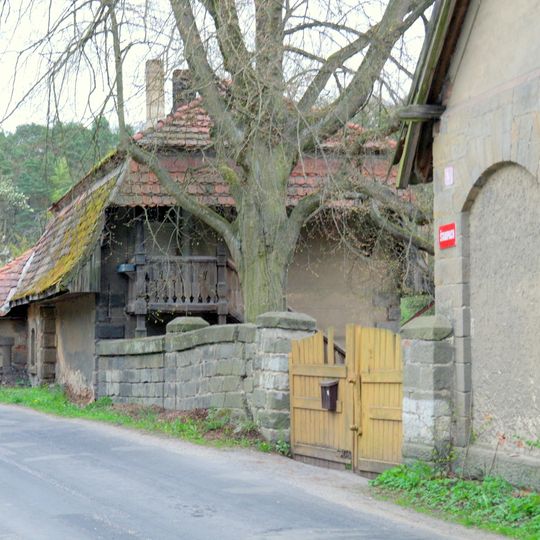
Mlýn Štampach, Historic watermill in Střemy, Czech Republic.
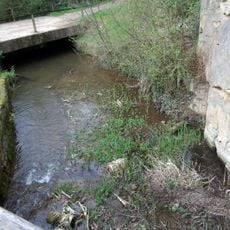
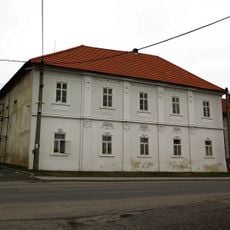
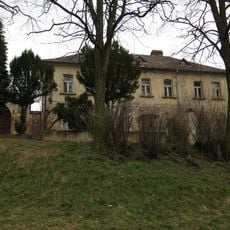
Mlýn Štampach is a one-story stone watermill in Střemy, with the mill room and house under one roof but separated inside. Water reached it from a pond via a millrace, sluice and wooden trough, then returned through a tailrace to the Pšovka stream. A paleční wheel and millstone boundary survive from the original milling equipment.
The mill is first documented in 1713, when it belonged to Pavel Fiala. The Theresian cadastre of 1748 records one miller on a manorial mill with one wheel and one groat stamp on intermittent water; the 1757 cadastre names it Štampach. Josef Kučera bought it in 1859, and it has stayed in his family.
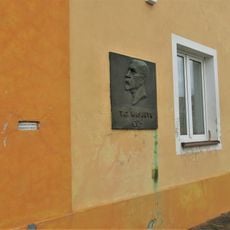
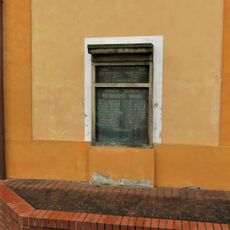
The mill has belonged to the Kučera family since Josef Kučera bought it in 1859. Three of his sons made careers beyond milling: Pavel Ludvík Kučera directed the State Health Institute, Karel Kučera directed the National Bank, and František Kučera, who stayed at the mill, was a local politician. Memorial plaques for Pavel and František hang at the mill.
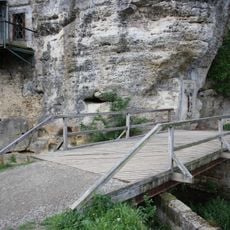
The mill stands by the Pšovka stream in Střemy. A water conduit once led from the pond through a sluice and wooden trough, with the outflow channel returning water to the stream. The building is a single-story brick structure with the mill room and house under one roof but separate inside. Look for the surviving paleční wheel and millstone frame.
The mill's 1939 milling-register questionnaire lists its equipment: most machines came from the Prokop Pardubice factory, the huller from the Vienna firm Hoeder and Co., and a holendr for making groats from an unknown maker. A 1930 record gives one overshot wheel, flow 0.08 m³/s, head 4.29 m and output 3.51 HP.
The community of curious travelers
AroundUs brings together thousands of curated places, local tips, and hidden gems, enriched daily by 94,232 contributors worldwide.