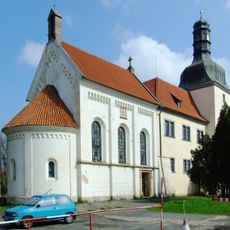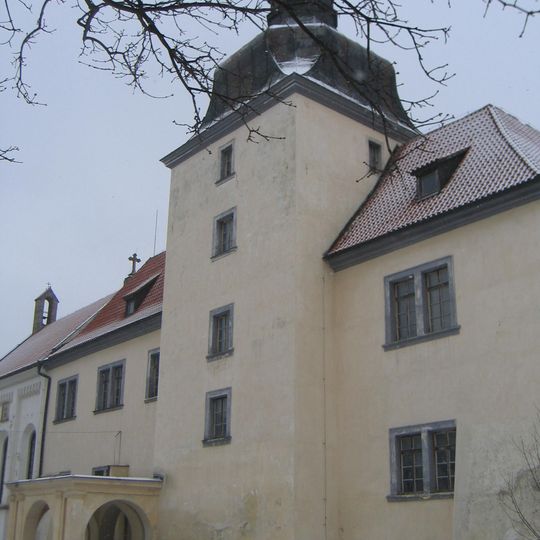
Dolní Břežany Castle, Renaissance château in Dolní Břežany, Czech Republic.
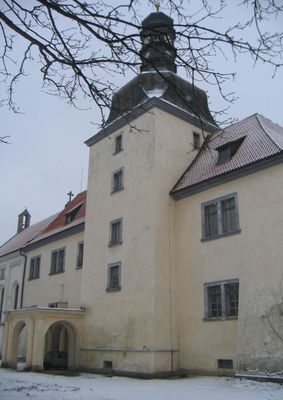
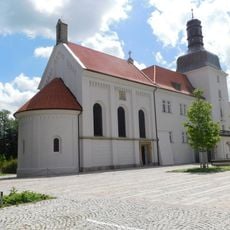
Dolní Břežany Castle is a four-winged, two-storey Renaissance building erected around 1600 around a square courtyard, with a prismatic tower in the west facade. The vaulted passage carries ceiling stucco from the late 17th century, and a tombstone from around 1580 is set into the wall. The neo-Romanesque Chapel of St Mary Magdalene, built 1885–1887, stands within the grounds.
A fortress on the site is first mentioned in 1332; the present four-winged castle was built around 1600 in Renaissance style. In the early 18th century it was bought by Prague archbishop Ferdinand Count Khünburg and served as the economic and administrative centre of the Dolní Břežany estate, held by the Prague archbishopric for almost 300 years. In 1945 the buildings were seized by the state, and restitution later returned the castle to the archdiocese.
The castle chapel, built in Neo-Romanesque style between 1885 and 1887, is dedicated to Saint Mary Magdalene and Mass is still celebrated there every Sunday at 9:30. The castle itself served for nearly 300 years as the economic and administrative centre of the Dolní Břežany estate owned by the Prague archbishopric.
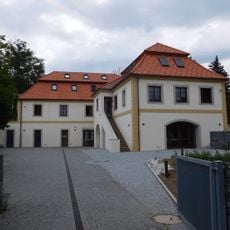
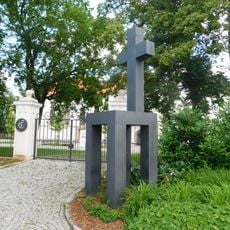
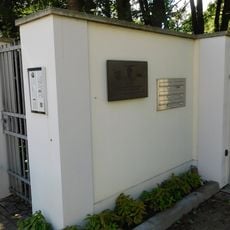
The castle stands at the eastern edge of Dolní Břežany, next to the road to Zlatníky. The grounds include a gate, the Chapel of St Mary Magdalene and former farm buildings. The chapel holds Mass every Sunday at 9:30. The castle itself is not open to casual visitors.
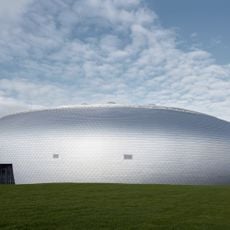
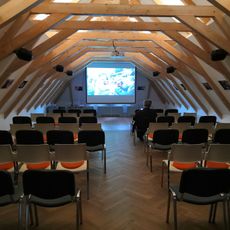
The castle's former farmyards now hold the ELI Beamlines and HiLASE laser research centres, built on land that once formed the estate's economic base. The archdiocese expected the 2016–2018 hotel conversion to draw scientific visitors from both facilities; the hotel proved unprofitable and closed in spring 2020.
The community of curious travelers
AroundUs brings together thousands of curated places, local tips, and hidden gems, enriched daily by 94,251 contributors worldwide.