Chateau Dlouhá Lhota, Baroque château in Dlouhá Lhota, Czech Republic.
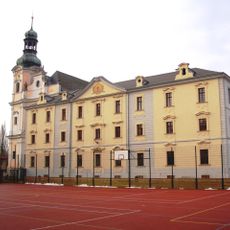
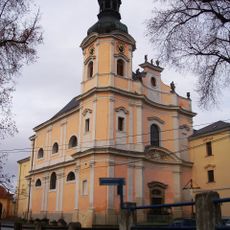
Chateau Dlouhá Lhota is a one-storey building with a rectangular plan on a gentle slope at the southern edge of the village. Its facade has a central single-axis risalit topped by a triangular pediment with a round tower, and a double staircase with two military emblems and a Neoclassical grille leads to the entrance. A side annex has arcades with pilasters.
Dlouhá Lhota belonged to the Pičín estate until 1515, when it passed to Mikuláš Bechyně of Lažany; a Renaissance fortress was then founded in the village. First documented in a 1630 sale contract, the fortress was burned during the military upheavals of that era. The Bechyně of Račín family rebuilt it as a Baroque château, and late 18th-century works gave the building its Neoclassical character.
The château's name comes from the village of Dlouhá Lhota in the Příbram district. Its large hall hosted social events in the second half of the 20th century, when the building also housed the local national committee and a public security office. Today the reconstructed château, with its park and former farmyard, serves as a hotel.
The château now operates as a hotel, so the interior is accessible to guests rather than as a museum. The grounds lie on a gentle slope at the southern edge of the village, with the main building on the south side of the former farmyard. A gate beside the château leads into the walled park, where a 27-metre summer oak stands.
In the walled park south of the château stands a summer oak 27 metres tall with a trunk circumference of 512 centimetres, protected as a memorial tree under the name Dub vladyky Bavora. A small gazebo occupies the south-western corner of the wall.
The community of curious travelers
AroundUs brings together thousands of curated places, local tips, and hidden gems, enriched daily by 94,497 contributors worldwide.