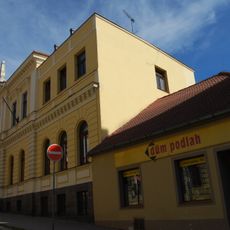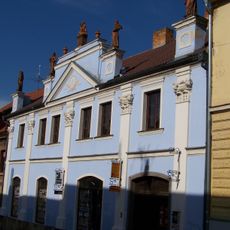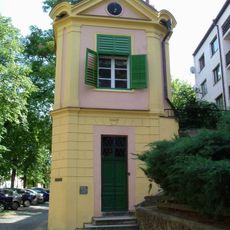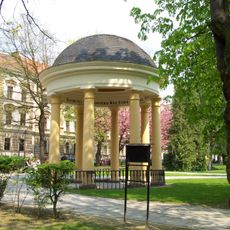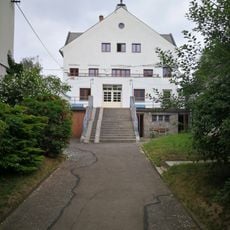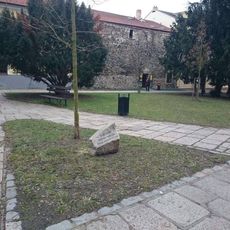
Raabova vila, villa in Budějovické Předměstí, Czech Republic
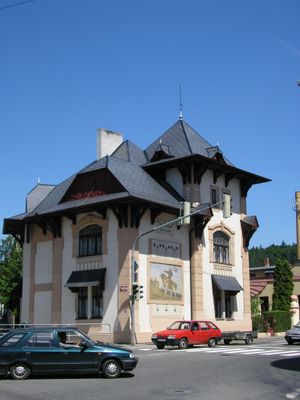
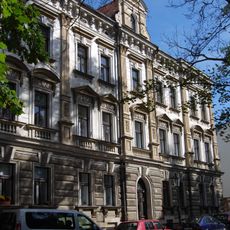
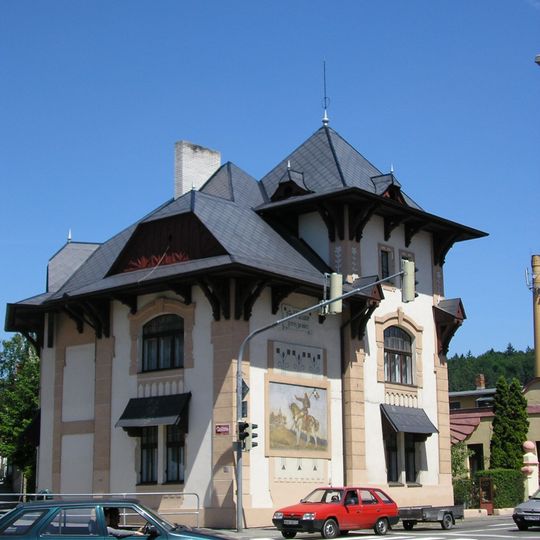
Raabova vila is a two-story residential building with a rectangular plan, featuring a roof that is partly gabled and partly tent-shaped. Its south-facing facade displays sgrafito decoration and carved wooden frames around windows and corners, with flower-shaped ornaments at the edges.
The villa was built in 1901 by architect Dušan Jurkovič, a Slovak designer known for drawing inspiration from folk traditions and local building styles. It was commissioned by businessman Adolf Raab as a residence and worker housing, and has been protected as a cultural monument since 1958.
The house displays a large fresco of Saint Wenceslas painted by A. Hanše on its facade, reflecting local religious traditions and pride. The carved wooden frames around windows and corners incorporate patterns inspired by regional folk craftsmanship and everyday building practices.
The villa is located at the corner of Sedlackov and Taborska streets in the Budějovické Předměstí district and is easily visible when walking through the neighborhood. The building is not open for interior visits but can be admired from the street, where its decorative details are clearly visible.
The building was one of Jurkovič's first independent projects, marking his shift toward a style that moved away from historical influences and embraced local folk motifs instead. The carved wooden beams inside feature detailed designs that reveal the careful craftsmanship invested in the construction.
The community of curious travelers
AroundUs brings together thousands of curated places, local tips, and hidden gems, enriched daily by 92,474 contributors worldwide.