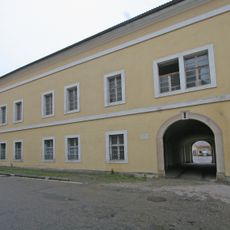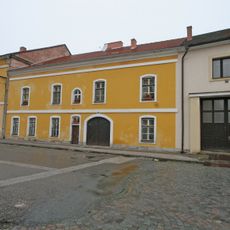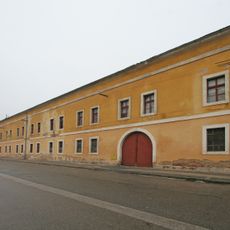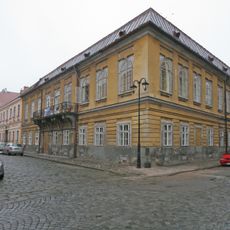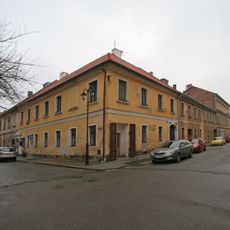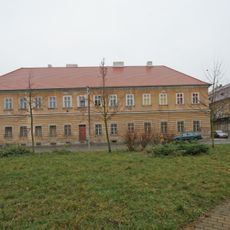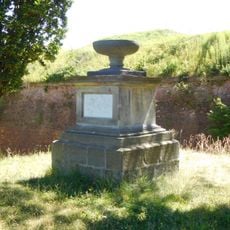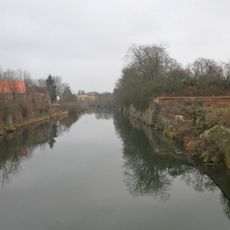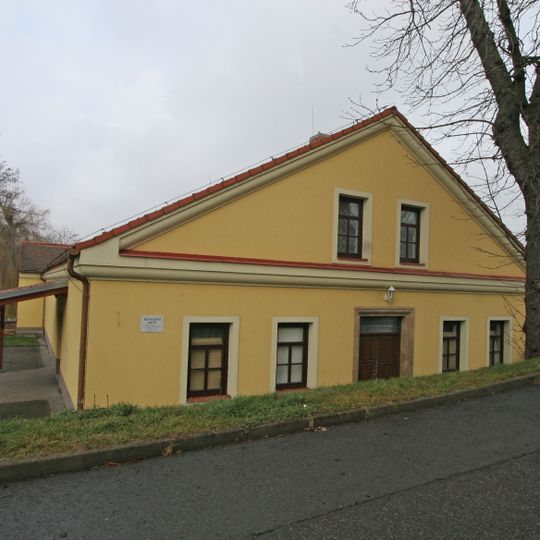
Pevnostní mlýn, Historic watermill in Josefov, Czech Republic
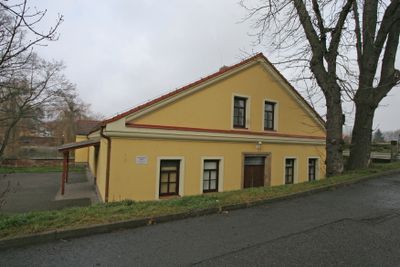
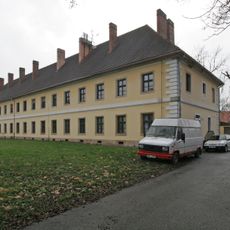
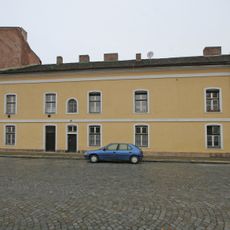
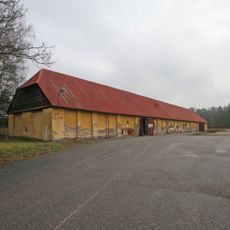
Pevnostní mlýn is a single-storey rectangular brick watermill on the Elbe north of the Josefov fortress, built in 1787–1788 and oriented perpendicular to the river. Its low saddle roof extends southward and the main east facade has four window axes. The mill room is covered by a massive barrel vault up to 90 cm thick, kept for resistance to artillery bombardment; the mill was abolished in 1892 and converted into a waterworks.
Pevnostní mlýn was built in 1787–1788 on the Elbe north of the Josefov fortress. In 1890 the owner replaced the original plain milling stones with semi-artistic ones, but the mill was abolished just two years later; on 25 April 1892 an auction of all equipment was held, followed by conversion of the building into a waterworks.
The mill's name refers to its link with the Josefov fortress, whose artillery bombardment resistance shaped the building: the mill room's barrel vault is up to 90 cm thick, and for military reasons the mill could not have the four floors needed for an artistic milling system. In 1890 the owner replaced the original common milling equipment with a semi-artistic set, but the mill was abolished two years later.
The mill can be reached by following marked trails from Josefov center, with parking areas available near the fortress entrance. It is best visited as part of a walk through the fortification area to see both structures together.
The mill's vaulted ceiling reaches up to 90 cm thick, built to withstand artillery bombardment. That thickness meant the mill could not have the four floors needed for a full artistic milling system, so in 1890 the owner installed only a semi-artistic set of millstones.
The community of curious travelers
AroundUs brings together thousands of curated places, local tips, and hidden gems, enriched daily by 94,498 contributors worldwide.