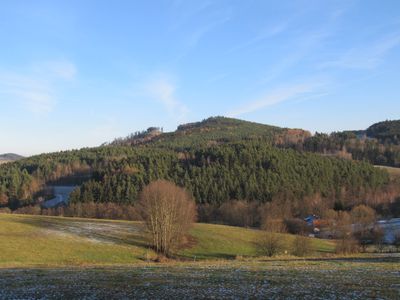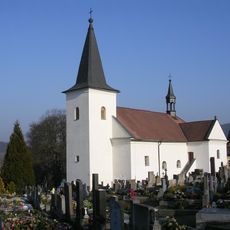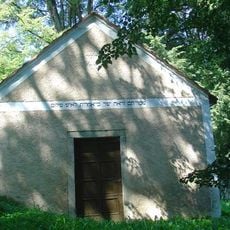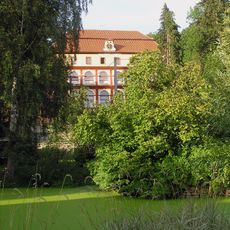
Věnec, a hillfort near Zálezly, southern Bohemia, Czech Republic
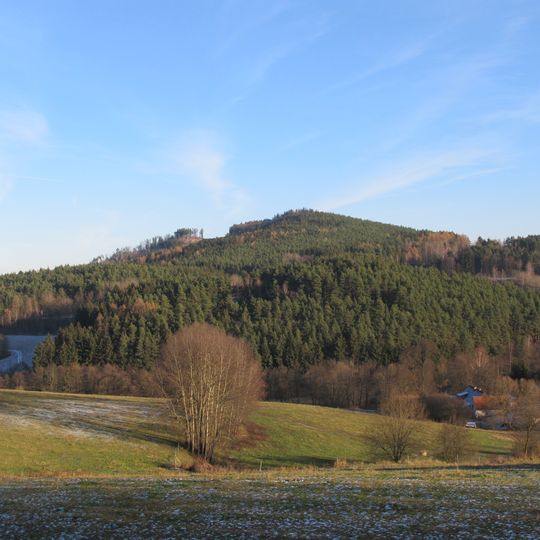
Věnec is a prehistoric hillfort on the summit of the same-named hill at 765 m, two kilometres southeast of Zálezly. Its perimeter rampart runs about 1,530 m and encloses roughly 8 hectares. The acropolis covers about 0.5 ha; its northern side is formed by a 270 m long broken rock wall 10–15 m high, while the remaining rampart is up to 10 m high and 280 m long. The entrance lies on the south side.
The hilltop was already settled in the Stone Age; the ramparts were built in the late Hallstatt to early La Tène period. Johann Gottfried Sommer first mentioned the site in 1840, and Bedřich Dubský's 1919–1920 excavation uncovered pottery and part of a bronze belt from the 6th–5th century BC. The site was used again at the end of the La Tène period.
The name Věnec ("wreath") is not documented in the sources as referring to the ramparts; the site is named after the hill itself. Today the acropolis holds modern visitor facilities — a fire pit, benches and low retaining walls — and a natural spring that was adapted into a well. The summit is freely accessible.
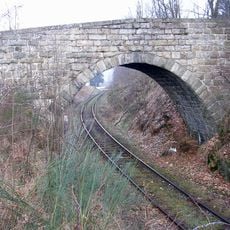
The site is freely accessible. A blue-marked trail from Hradčany runs through the outer fortifications to the Lčovice railway stop on the Strakonice–Volary line. A branch off the red-marked trail from Zálezly to Budilov leads directly up to the acropolis on the summit.
The 270-metre band of broken rock wall on the north side, 10 to 15 metres high, forms the acropolis edge; the gateway on the south side is not the original 'pincer' gate described in some publications but a modern modification made to ease timber hauling.
The community of curious travelers
AroundUs brings together thousands of curated places, local tips, and hidden gems, enriched daily by 92,611 contributors worldwide.