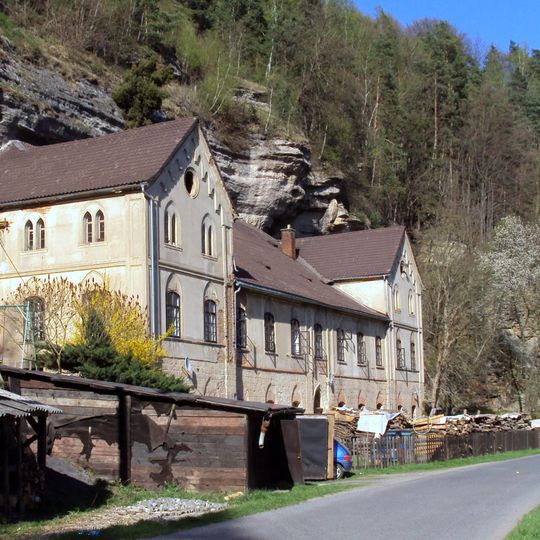
Grindery of mirrors Rabštejn, Mirror grinding facility in Lindava, Czech Republic
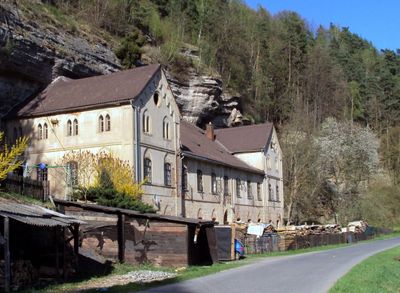
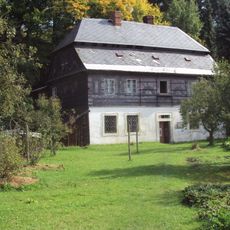
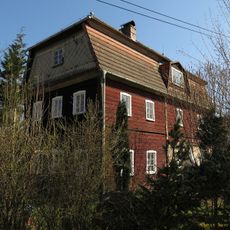
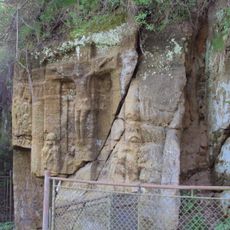
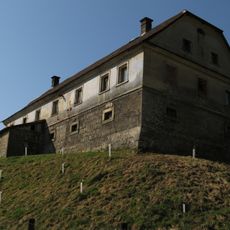
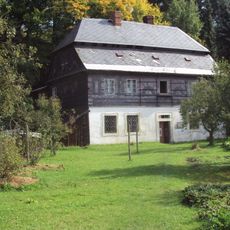
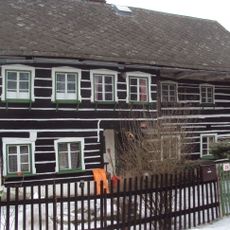
The Rabštejn mirror grinding works is a neo-Gothic building of 1854 standing on the left bank of the Svitávka in the Velenice Valley. Its central section is single-storey with a lean-to roof, the two-storey side wings have saddle roofs, and the seven-axis front has two-part windows; the second-floor windows of the wings end in pointed arches. Part of the production space was cut into the sandstone cliff behind the masonry.
Count Josef Jan Maxmilián Kinský had his first mirror grinding works built at Sloup in 1756, then established further grinding facilities in the Velenice Valley between 1756 and 1767. The Rabštejn works itself was built only in 1854 under Karel Kinský, and both valley grindings operated until the Great Depression of the 1930s. The buildings stood empty during World War II and the Rabštejn building was later used for housing.
The Kinský family's grinding shops produced so-called Venetian mirrors, exported from Bohemia through Venetian merchants to markets across the world. After the Velenice Valley works opened, the family closed its first grinding shop below the rock castle at Sloup and set up a workshop there making carved wooden frames instead.
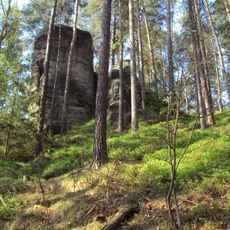
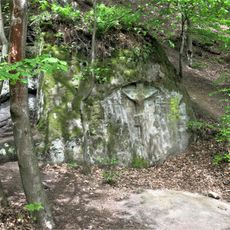
The facility sits between the river and sandstone cliffs, which shapes its position in the landscape. Visitors should be prepared for uneven terrain in some areas, as sections are built into the rocky hillside.
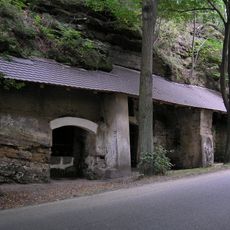
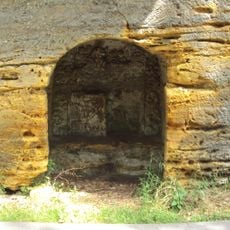
The water came from a weir called Schwarzes Wehr (Black Weir), where the Svitavka was dammed and led into a tunnel cut in the sandstone; the tunnel portal bears the carved dates 1779 and 1872. After the Rabštejn works was finished, the channel was extended by about 500 metres of open trough into a rock tunnel running straight into the building.
The community of curious travelers
AroundUs brings together thousands of curated places, local tips, and hidden gems, enriched daily by 94,498 contributors worldwide.